Over 90 percent of american consumers say that brand familiarity affects their purchasing decisions. In crowded markets, standing out is more challenging than ever. Businesses that understand how people recognize and trust their brand can build loyalty and command higher prices. Knowing what shapes brand awareness helps american companies move from being just another option to becoming the natural choice for customers.
Table of Contents
- Defining Brand Awareness And Its Importance
- Types Of Brand Awareness In Marketing
- How Brand Awareness Is Measured
- Strategies To Build Brand Awareness
- Common Challenges And Mistakes To Avoid
Key Takeaways
| Point | Details |
|---|---|
| Importance of Brand Awareness | Brand awareness is crucial for influencing purchasing decisions and building consumer trust. Strong brand recognition can enhance market positioning and reduce perceived risk. |
| Types of Brand Awareness | Brand awareness consists of brand recognition and brand recall, with top-of-mind awareness being the ultimate goal for effective brand positioning. |
| Measurement Strategies | Measuring brand awareness involves various methods such as surveys, social media analysis, and digital tracking, focusing on both qualitative and quantitative insights. |
| Common Challenges | Businesses should avoid inconsistent messaging and neglecting target audience research to successfully build and sustain brand awareness in a competitive market. |
Defining Brand Awareness and Its Importance
Brand awareness represents the critical foundation of a company’s marketing strategy, defining how consumers recognize and connect with a business’s identity. At its core, brand awareness refers to the extent to which potential customers can recall and identify a specific brand across various contexts. Consumers’ familiarity with a brand directly influences purchasing decisions and market positioning.
Understanding brand awareness goes beyond simple name recognition. It encompasses the emotional and psychological connections consumers develop with a brand’s visual identity, messaging, and perceived value. Consumers assess brand characteristics and perceived risks before making purchasing decisions, which means strong brand awareness can significantly reduce purchasing hesitation and build consumer trust.
The strategic importance of brand awareness cannot be overstated. Businesses that effectively develop their brand recognition can expect several key benefits:
- Distinguishing products in competitive markets
- Commanding price premiums for recognized brands
- Fostering long-term customer loyalty
- Encouraging organic word-of-mouth marketing
- Reducing consumer perceived risk during purchase decisions
Successful brand awareness is not about aggressive marketing but creating genuine, memorable connections that resonate with target audiences. By consistently communicating core values, maintaining visual consistency, and delivering exceptional experiences, businesses transform from mere product providers to memorable brands that consumers actively seek out and recommend.
Types of Brand Awareness in Marketing
Understanding the nuanced landscape of brand awareness requires exploring its distinct types, each playing a critical role in consumer perception and marketing strategy. Brand recognition and brand recall represent the foundational dimensions that help businesses understand how consumers interact with their brand across different cognitive stages.
The first type, brand recognition, involves consumers’ ability to identify a brand through specific visual or auditory cues like logos, colors, or jingles. Consumers can identify a brand when directly encountering its visual elements, which means they can immediately connect a brand’s sensory stimuli with its identity. This type of awareness acts as the initial touchpoint in building brand familiarity.
Beyond recognition, brand recall represents a deeper level of consumer awareness. This occurs when potential customers can retrieve a brand’s name from memory when considering a specific product category. For instance, when someone thinks about smartphones, certain brands might immediately spring to mind. The hierarchy of brand recall can be further broken down into multiple levels:
- Unaided Recall: Spontaneously naming a brand without prompts
- Aided Recall: Recognizing a brand when given category-specific cues
- Top-of-Mind Awareness: Being the first brand consumers think of in a product category
The final sophisticated level of brand awareness is top-of-mind awareness, where a brand becomes the automatic, instinctive first choice for consumers within its product category. This represents the pinnacle of brand recognition, where marketing efforts have successfully positioned the brand as the default, most memorable option. Achieving this status requires consistent messaging, exceptional customer experiences, and strategic brand positioning that resonates deeply with target audiences.

How Brand Awareness Is Measured
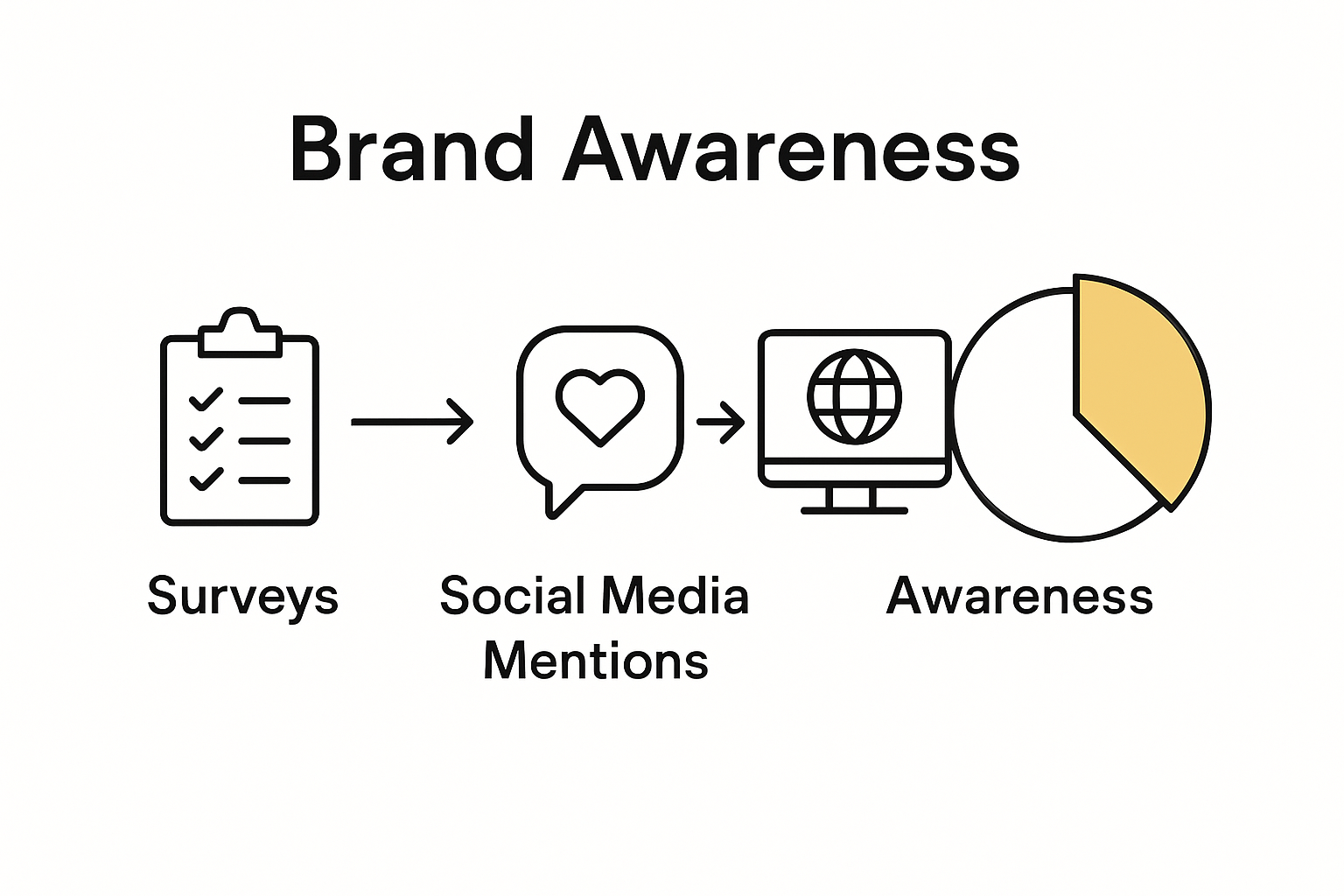
Measuring brand awareness is a sophisticated process that goes beyond simple numerical tracking, requiring a multifaceted approach to understanding consumer perceptions and interactions. Brand awareness measurement encompasses several strategic methodologies designed to provide comprehensive insights into how consumers recognize and remember a brand across different contexts.
The primary measurement techniques are categorized into three distinct levels of awareness: top-of-mind awareness, unaided awareness, and aided awareness. Consumer behavior metrics and advertisement effectiveness play crucial roles in assessing brand recognition and understanding the depth of brand connection. Top-of-mind awareness evaluates which brand consumers first recall in a specific product category, while unaided awareness measures spontaneous brand recall without providing visual or auditory prompts.
Brands employ various research methods to gauge their awareness levels:
- Surveys and Questionnaires: Direct consumer feedback collection
- Social Media Sentiment Analysis: Tracking online brand mentions and perceptions
- Website Traffic and Engagement Metrics: Measuring digital brand interactions
- Brand Recall Studies: Structured research to test consumer memory
- Digital Tracking Tools: Analyzing search volume and online brand searches
Advanced brand awareness measurement goes beyond traditional metrics, integrating qualitative and quantitative approaches. Sophisticated marketers now leverage advanced analytics, machine learning algorithms, and multi-channel tracking to develop a nuanced understanding of brand perception. This holistic approach allows businesses to not just measure awareness, but to understand the emotional and psychological connections consumers develop with their brand, transforming raw data into strategic insights for future marketing initiatives.
Strategies to Build Brand Awareness
Building brand awareness requires a strategic, multifaceted approach that goes beyond traditional marketing techniques. Effective strategies encompass multiple channels and touchpoints designed to create memorable interactions between businesses and their target audiences. The goal is not just visibility, but creating meaningful connections that resonate with consumers.
Enhancing brand association and improving perceived quality form the cornerstone of successful brand awareness development. This involves crafting a consistent narrative that communicates a brand’s unique value proposition across various platforms. Strategic approaches include developing compelling storytelling, maintaining visual consistency, and creating experiences that differentiate the brand from competitors.
Key strategies for building brand awareness include:
- Content Marketing: Creating valuable, shareable content that demonstrates expertise
- Social Media Engagement: Developing an authentic, interactive online presence
- Influencer Partnerships: Leveraging trusted voices to expand brand reach
- Sponsorships and Community Involvement: Connecting with audiences through meaningful experiences
- Consistent Visual Branding: Maintaining uniform design elements across all platforms
Successful brand awareness isn’t about aggressive marketing, but about creating genuine connections. By focusing on authentic storytelling, delivering consistent value, and understanding target audience preferences, businesses can transform from mere service providers to memorable brands that consumers instinctively trust and recommend. The most powerful brand awareness strategies are those that make consumers feel genuinely understood and appreciated.
Common Challenges and Mistakes to Avoid
Market saturation and brand differentiation represent significant hurdles for businesses attempting to establish memorable brand identities. Navigating these challenges requires a strategic approach that goes beyond traditional marketing tactics, understanding that simply existing in the marketplace is not enough to capture consumer attention and loyalty.
Sustaining consumer interest and effectively utilizing advertising channels demands continuous innovation and adaptability. Businesses frequently encounter pitfalls that can derail their brand awareness efforts, often stemming from a fundamental misunderstanding of their target audience’s needs and preferences.
Key challenges and potential mistakes include:
- Inconsistent Messaging: Sending mixed signals across different marketing platforms
- Neglecting Target Audience Research: Failing to understand consumer demographics and psychographics
- Lack of Authenticity: Creating brand communications that feel forced or inauthentic
- Overcomplicating Brand Identity: Developing complex narratives that confuse rather than connect
- Ignoring Customer Feedback: Dismissing critical insights from actual consumer experiences
Successful brand awareness is not about avoiding every potential mistake, but about developing resilience and adaptability. Businesses must remain flexible, continuously learning from missteps and refining their approach. The most effective brand strategies emerge from a willingness to listen, adjust, and genuinely connect with consumers beyond superficial marketing tactics.
Elevate Your Brand Awareness with Proven Digital Marketing Solutions
Understanding how to build strong brand awareness is crucial, but putting those strategies into action can be challenging. If you are struggling with inconsistent messaging, difficulty connecting authentically with your audience, or standing out in a saturated market, you need a partner who knows how to transform these obstacles into growth opportunities. At Appture Digital Media, LLC, we specialize in crafting clear brand strategies combined with eye-catching web design, effective search marketing, and engaging social media management to create lasting impressions that resonate.
You can stop wasting resources on underperforming digital efforts and start focusing on measurable results that truly build trust and loyalty. Our team delivers beautiful, consistent branding that helps you rise to top-of-mind awareness through authentic storytelling and expert execution. Discover how our comprehensive services can turn your brand into the one customers instinctively choose by scheduling your strategy session today.

Ready to drive real brand recognition and customer connection? Get started now by booking a free consultation with our experts at Appture Digital Media. Explore how targeted search marketing and professional video production enhance your visibility while our creative design brings your brand story to life. Don’t wait to make your brand unforgettable. Visit https://leadbuildermarketing.com/meetnow and take the first step toward achieving measurable brand success.
Frequently Asked Questions
What is brand awareness?
Brand awareness refers to how well consumers recognize and connect with a specific brand. It encompasses consumers’ familiarity with a brand’s identity, emotional associations, and perceived value.
Why is brand awareness important for businesses?
Brand awareness is crucial as it influences purchasing decisions, builds customer trust, differentiates products in competitive markets, and fosters long-term loyalty, ultimately enhancing market positioning.
How can a company measure brand awareness effectively?
Brand awareness can be measured through various methods including surveys, social media sentiment analysis, website traffic metrics, and brand recall studies to assess the depth of consumer recognition and connection.
What are some effective strategies to build brand awareness?
Effective strategies include content marketing, social media engagement, influencer partnerships, sponsorships, and maintaining consistent visual branding. The key is to create meaningful connections with the target audience.
Recommended
- 14 Ways To Improve Ecommerce Product Pages For SEO – Appture Digital ~ 855 Get Bizz
- LLMO: 10 Ways To Work Your Brand Into AI Answers – Appture Digital ~ 855 Get Bizz
- Real Estate SEO: 6 Things You Can Do To Compete With Big Sites – Appture Digital ~ 855 Get Bizz
- Marketing Channels: 12 Key Options With Pros And Cons – Appture Digital ~ 855 Get Bizz