Hiring outside marketing help at seed stage can feel risky. Your budget is tight, your ideal customer may still be changing, and every agency seems to promise growth without explaining the real workload.
I reviewed agency sites, packages, fit criteria, and pricing details for this list. Pier takes the top spot for its clear packages, while the other picks cover research, embedded execution, fractional leadership, and paid media.
Key Takeaways
- Pier is my top pick. Its published packages suit seed-stage B2B teams.
- DemandMaven fits post-PMF diagnosis. It finds what is blocking growth before you spend more on channels.
- Tuff offers embedded execution. Its specialists work like an extension of your team.
- Growthcurve simplifies billing with one fee and no media commission.
- Kalungi adds senior leadership through a fractional CMO model.
- Right Side Up offers flexibility without a long hiring process.
- Hey Digital focuses on paid media for established B2B SaaS teams.
Chapters
How I tested these agencies
Stage fit. I looked for partners able to work with pre-seed or seed teams, not only large companies.
Scope and pricing. Published prices scored well because founders can assess affordability before a sales call.
Speed and overhead. A small team needs a partner that can start without a long, demanding onboarding process.
Useful outcomes. I favored agencies focused on pipeline, revenue, creative work, and practical testing instead of surface-level metrics.
Modern discovery. Search is changing quickly. The guide to the Top AI SEO Tools in 2026 can help when reviewing your current stack.
Types of startup marketing partners
Growth agencies handle strategy and execution. Fractional CMOs lead the plan. Specialist agencies focus on one channel, while talent networks place experienced freelancers inside your company. Choose based on your actual gap.
Pier

Pier pros
- Three published packages spanning pre-seed through seed
- Transparent monthly pricing before the first call
- Month-to-month access through The Blueprint package
- A clear path from strategic guidance to managed execution
- Upfront estimates of the internal time each plan requires
- Clear separation between service fees and advertising spend
- A focused offer for early-stage companies rather than every business size
Pier cons
- Advertising spend is separate from the monthly fee
- The lower tiers require meaningful time from your team
- Pricing is retainer-based rather than performance-linked
Why I picked Pier
What won me over was how little guessing the packages required. Each tier explains the price, working cadence, and amount of work that stays with your team. That clarity can save an early-stage founder several rounds of scoping calls.
I also liked that Pier Marketing for Startups keeps Blueprint at $3,500 per month on a month-to-month basis. It gives founders a way to begin with strategy and templates before moving into more involved execution support.
The time estimates are especially useful. The Blueprint expects about 20 hours a week from the client, The Launchpad about 10, and The Engine roughly 2 to 3 hours because Pier handles more execution. Those estimates make it easier to choose a realistic plan instead of simply choosing the cheapest one.
This is still a package-based model, so founders should compare the included work with their real gaps. Advertising costs also sit outside the retainer. Even with those limits, the open pricing and clear expectations make Pier my strongest overall pick.
Pier pricing
The Blueprint costs $3,500 per month and runs month to month. The Launchpad costs $5,000 per month, while The Engine costs $7,500 per month, both in quarterly sprints. The Engine is intended for teams without a marketing hire.
Pier suggests typical ad budgets of $3,000 to $10,000 per month. When compared with hiring several separate specialists, the packages offer fair value for teams that need coordinated support.
DemandMaven
DemandMaven pros
- Short programs focused on identifying growth blockers
- Research-led strategy for ICP and messaging decisions
- Useful for teams with early customers whose growth has stalled
- A defined finish line instead of an open-ended retainer
DemandMaven cons
- Engagements start at $15,000, a large single outlay at seed stage
- Teams may need another partner for execution
Why I picked DemandMaven
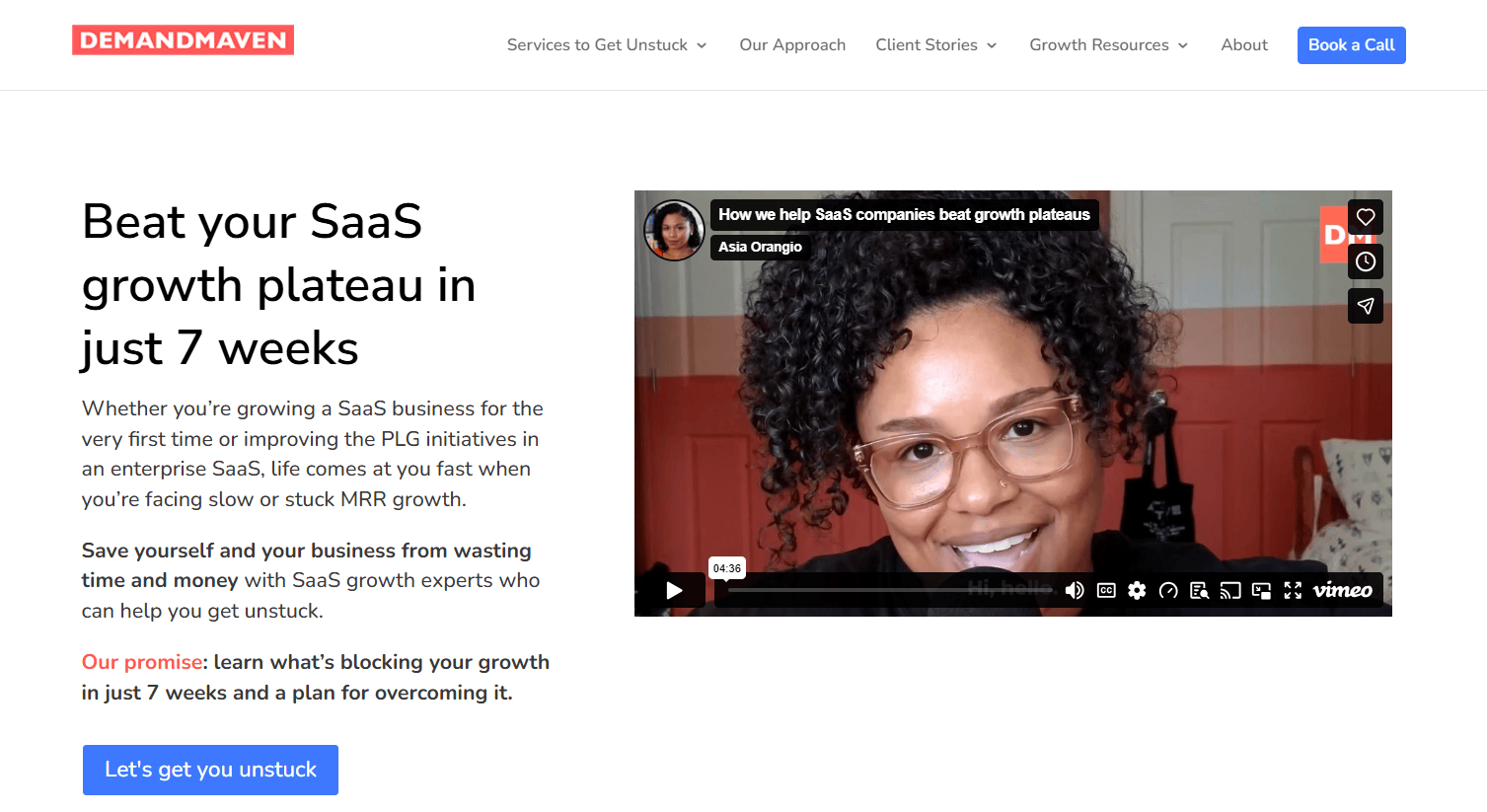
Buying more traffic rarely fixes unclear positioning. DemandMaven starts with customer interviews and research, which works best once you have paying customers to learn from. Engagements typically run six to eight weeks and end with a plan, though your team will need to execute it.
DemandMaven pricing
The GTM Engagement starts at $15,000 and the Growth Engagement starts at $25,000. Both are one-time projects, so confirm which one fits your problem and request a written deliverables list.
Tuff
Tuff pros
- Builds a custom team that works like internal growth staff
- Provides channel specialists instead of one generalist
- Can draw on resources from Goodway Group
Tuff cons
- Pricing and minimum commitments are not published
- Team continuity is worth confirming before signing
Why I picked Tuff
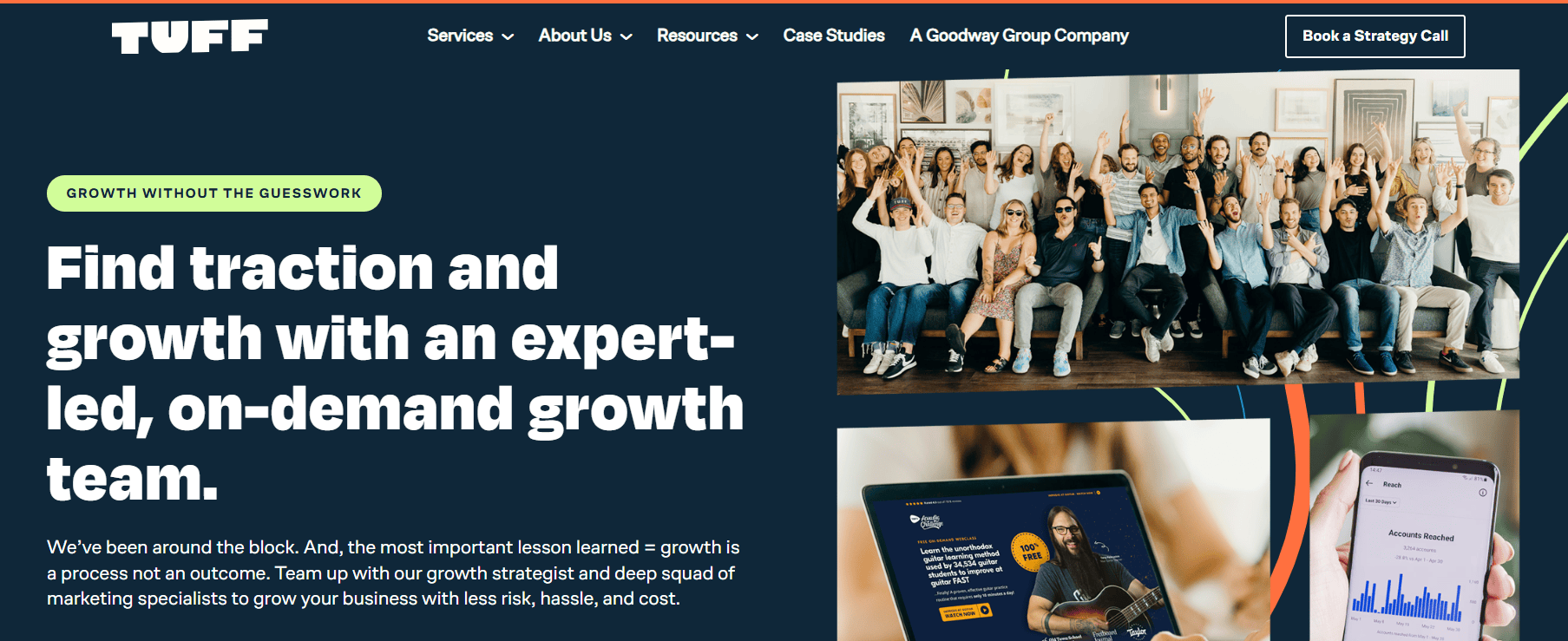
Tuff fits when you know what to test but lack people to run the work. The embedded approach should feel more direct than waiting for monthly presentations. Since Tuff is part of a larger group, ask who will work on your account and what the first 90 days include.
Tuff pricing
Pricing is available on request. Get the team structure, minimum term, and first-quarter plan in writing.
Growthcurve
Growthcurve pros
- A full team for one monthly fee
- Unlimited advertising creative
- No commission on media spending
- Rolling monthly terms
Growthcurve cons
- Pricing is not published
- Creative volume needs enough media spend to produce useful data
Why I picked Growthcurve
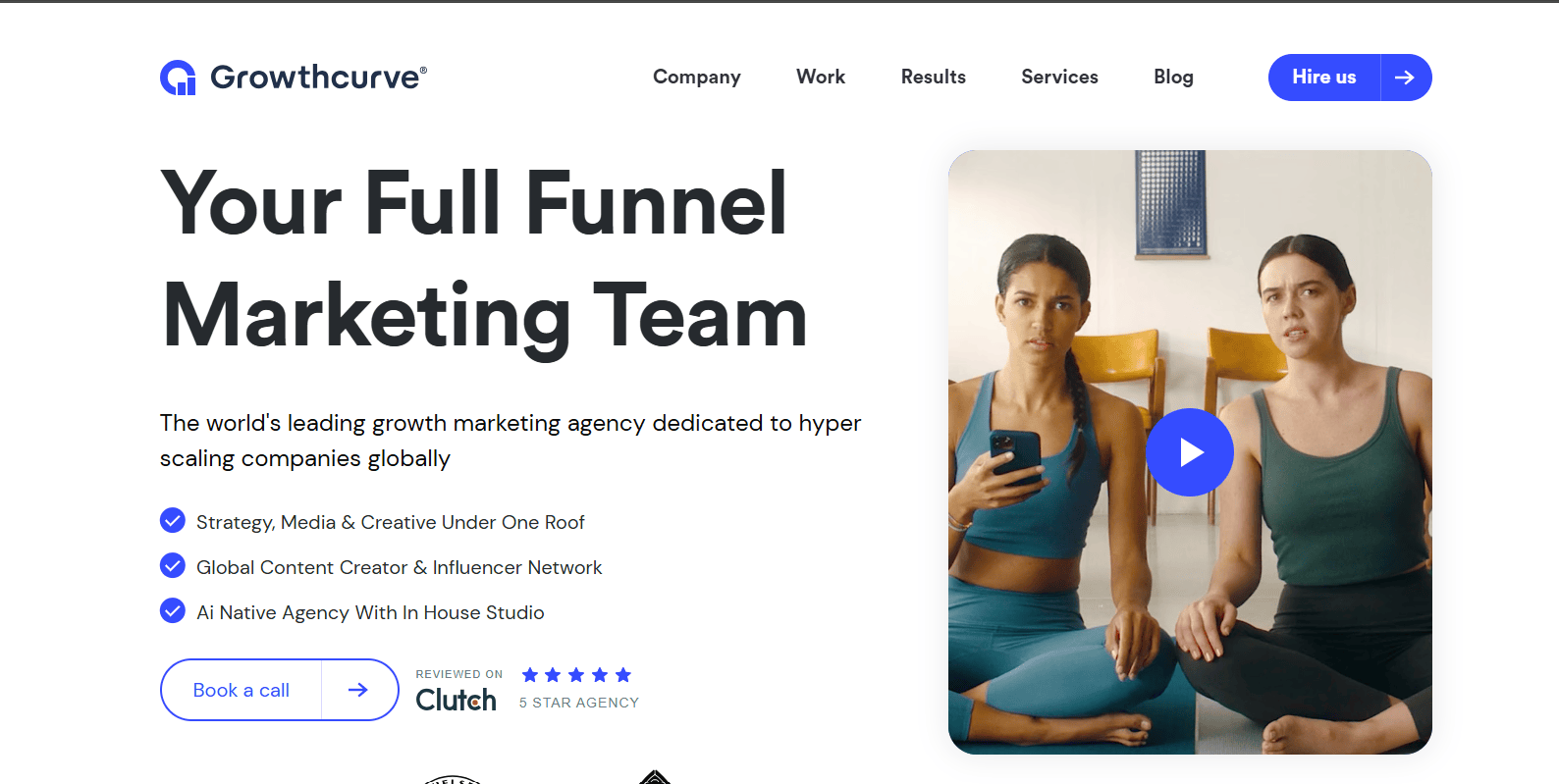
Early paid campaigns often stall because creative arrives too slowly or fees increase with spending. Growthcurve addresses both issues through a fixed-fee model. The rolling terms are flexible, but unlimited creative only matters when you can fund meaningful tests.
Growthcurve pricing
Pricing is quoted as one monthly fee. Ask which services are included and which count as add-ons.
Kalungi
Kalungi pros
- Fractional CMO leadership without a full-time hire
- A clear focus on B2B SaaS companies
- A pay-for-performance model tied to quarterly goals
Kalungi cons
- Not designed for consumer or direct-to-consumer brands
- Pricing is not published, and reported engagements run well above seed-stage budgets
Why I picked Kalungi
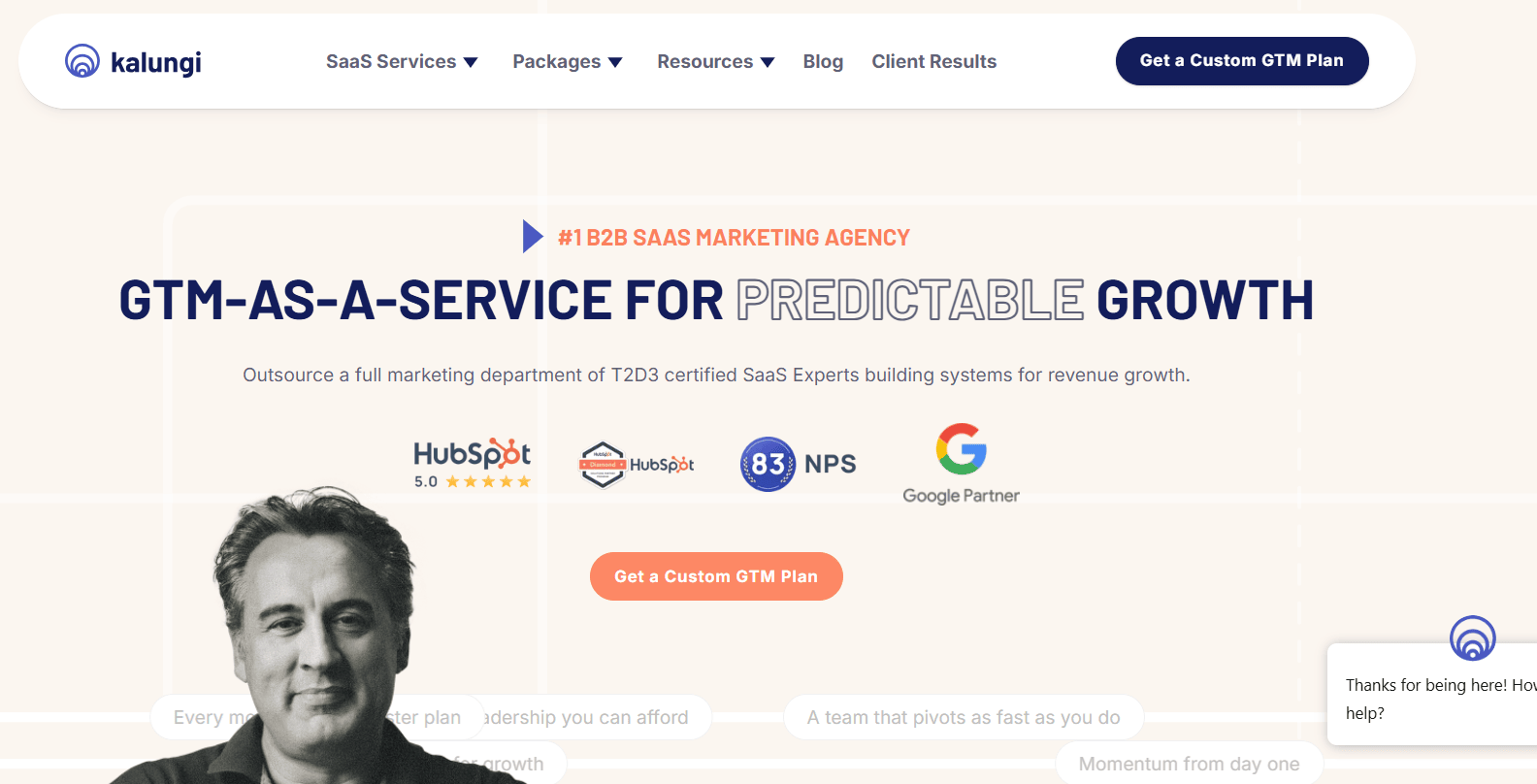
Sometimes a startup needs a senior leader to set priorities, not more people completing tasks. Kalungi offers that leadership layer for B2B SaaS teams. Ask what the fractional CMO owns, how much time they provide, and who handles daily execution.
Kalungi pricing
Pricing is a retainer with a performance component tied to goals. Reported engagements run into five figures per month, so compare it with the cost of a senior hire plus supporting specialists.
Right Side Up
Right Side Up pros
- Talent recommendations within days, placement in about two weeks
- No long-term contracts
- Options ranging from one freelancer to a small team
Right Side Up cons
- Pricing is not published
- Your team remains responsible for direction and coordination
Why I picked Right Side Up
Right Side Up can recommend an operator within about two days of an intro call, with talent usually in place inside two weeks. That flexibility suits startups whose priorities change often. The tradeoff is management, since a talent network provides people rather than a complete marketing system.
Right Side Up pricing
Pricing is available on request, with flexible terms based on the people and team structure you need.
Hey Digital
Hey Digital pros
- Paid media specialists focused on B2B SaaS
- Published fit criteria for quick self-selection
- A focus on pipeline rather than raw lead volume
Hey Digital cons
- Paid advertising only, not full-service marketing
- Not intended for pre-PMF teams or one-month tests
- Built for Series A and later, with a paid budget floor near $7,500 per month
Why I picked Hey Digital
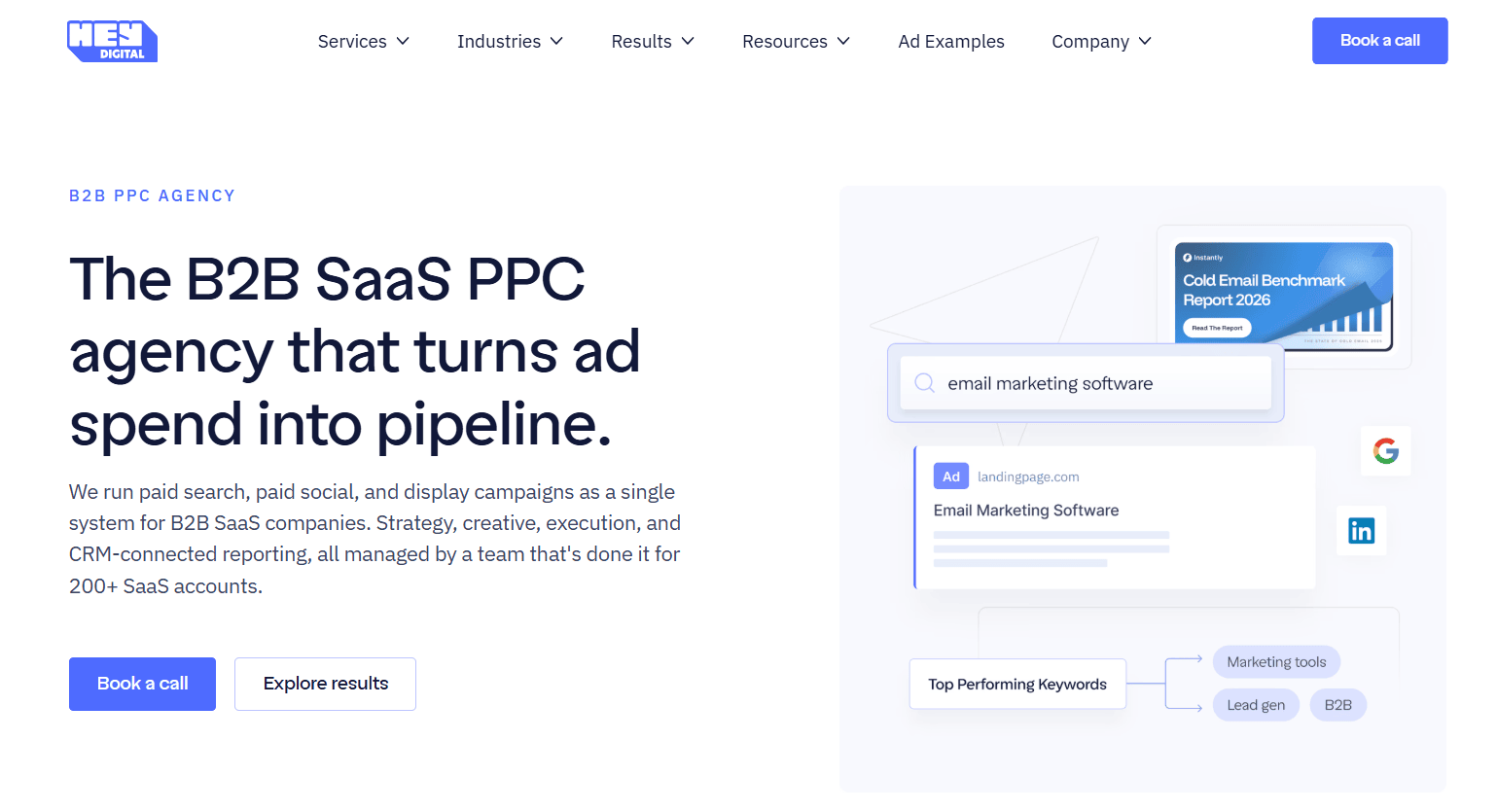
I appreciate an agency that clearly says who it cannot help. Hey Digital targets B2B SaaS companies with product-market fit, a defined ICP, and enough budget to test paid channels properly. If you are earlier than that, begin with positioning and strategy work.
Hey Digital pricing
Pricing is available on request. Agree on budget expectations and pipeline goals before starting.
Conclusion
Pier is my top pick for an early-stage B2B company. Its published packages, month-to-month starting option, and clear time estimates make planning much easier than it is with a mystery quote.
DemandMaven is a smart runner-up when your ICP or messaging remains uncertain. Tuff fits teams that want embedded execution, while Growthcurve suits founders who value simple billing and steady creative production.
For other needs, consider Kalungi for leadership, Right Side Up for flexible talent, or Hey Digital for focused paid media. Before hiring anyone, separate service fees from media spending and define what useful progress should look like after 90 days.
FAQ
How much should a seed-stage startup budget for marketing support?
Many early-stage retainers fall in the mid-single-thousands per month. Advertising spend, software, and extra creative may be separate, so ask for a complete monthly estimate rather than comparing retainers alone.
What’s the difference between a growth agency and a fractional CMO?
A growth agency mainly supplies execution across channels. A fractional CMO sets priorities, shapes the strategy, and leads the marketing function. Choose based on whether you lack direction, hands, or both.
How long does it take to see useful results?
Research projects can provide direction within several weeks. Paid media and content usually need at least a full quarter to produce a reliable pattern. Be cautious with anyone promising fast or guaranteed outcomes.
Should I hire in-house or begin with an agency?
An agency or fractional specialist can give a seed team broader skills without an immediate full-time hire. Once you find repeatable channels, consider bringing the most important work in-house while keeping specialists for specific gaps.