That’s not how good video production works.
The proposal process reveals whether you’re hiring a strategic partner or just renting equipment and a crew. I’m pulling back the curtain on what happens before you see a single line item, because understanding this process protects you from wasting money and helps you recognize when someone actually knows what they’re doing.
Discovery Happens Before Pricing
Strategic partners spend 60-90 minutes in discovery before discussing video specs. Execution vendors jump to specs in 15 minutes.
That gap tells you everything.
When I start a proposal conversation, I’m not asking about camera angles or editing styles. I’m asking about business outcomes. What happens after this video exists? Who sees it? What action do you need them to take? What have you tried before that didn’t work?
These questions serve as a starting point to gain comprehensive understanding of your vision and goals. Without that foundation, I’m just guessing at what you need.
I’ve watched companies burn $8,000 to $15,000 restarting projects because they rushed evaluations under one week. They missed critical warning signs. They hired based on price instead of process. They got exactly what they paid for—a video that technically exists but doesn’t accomplish anything.
Here’s what I’m actually listening for during discovery:
- The gap between what you’re asking for and what you actually need. Most people come in requesting a specific video type because they saw a competitor do it. That’s not strategy. That’s mimicry. I need to understand the problem you’re solving, not just the format you think will solve it.
- Whether you’ve defined success metrics. If you can’t tell me how you’ll measure whether this video worked, we’re not ready to talk about production. I’ll help you define those metrics, but I won’t move forward without them.
- How this fits into your broader content ecosystem. One video rarely solves anything. I’m looking at whether you have a distribution plan, a content calendar, and a realistic understanding of how video fits into your marketing system.
- What constraints actually matter. Budget and timeline are real, but they’re not the only constraints. Brand guidelines, internal approval processes, technical platform requirements—these all shape what’s possible.
Clarifying Goals Eliminates Scope Creep
Clearly outlining the project scope and deliverables protects your budget and reduces scope creep. But most people don’t know how to define scope until someone asks the right questions.
I ask about goals in layers.
- Business goal: What changes in your business if this video performs well? More qualified leads? Shorter sales cycles? Reduced support calls? Better employee retention?
- Audience goal: What does your viewer need to understand, believe, or do after watching? This is different from what you want to say. I’m looking for the transformation that happens in their head.
- Content goal: What specific message or story accomplishes both the business goal and the audience goal? This is where we start talking about video types, tone, and creative direction.
When these three layers align, you get a video that works. When they don’t, you get something that looks professional but doesn’t move the needle.
I’ve seen companies spend $50,000 on high production value marketing videos that generated zero ROI because they never clarified goals beyond “we need a brand video.” That’s not a goal. That’s a format.
Identifying Priority Video Types
Once we know what you’re trying to accomplish, we can talk about what types of videos actually serve that goal.
Here’s what I typically see companies need:
- Hero pieces: High-production flagship content that establishes authority and showcases capability. These are your quarterly investments—the videos you use for a year or more. Budget range: $5,000 to $25,000 depending on complexity.
- Evergreen explainers: Educational content that answers the questions your sales team hears repeatedly. These reduce friction in the buyer journey and stay relevant for years. Budget range: $3,200 to $7,800 for quality production.
- Social and campaign content: Shorter-form pieces designed for specific platforms and timeframes. These need volume and consistency. Budget range: $1,500 to $5,000 per piece, but the real question is how many you need.
- Testimonials and case studies: Proof of concept from real clients. These convert better than any sales pitch you’ll write. Budget range: $2,500 to $8,000 depending on production quality and number of subjects.
A realistic starting cadence for most marketing teams: weekly 1-2 short-form clips for social media, monthly 1-2 longer-form pieces, and quarterly 1 hero piece. That’s roughly 60-70 pieces per year.
Sounds like a lot. It’s not—if you have the right production model.
Establishing Realistic Timelines
A realistic timeline to create a professional marketing video is anywhere between four and eight weeks. That encompasses coordination of resources, filming, editing, and distribution.
But most people don’t understand what happens during those weeks.
- Pre-production (1-3 weeks): Planning, scripting, storyboarding, budgeting, location scouting, talent coordination, equipment prep. This phase determines whether production runs smoothly or turns into chaos.
- Production (1-2 days to 1 week): Actual filming including directing, lighting, capturing audio and video. The shortest phase in duration, but the most expensive in terms of resource concentration.
- Post-production (2-4 weeks): Editing footage, adding visual effects, sound design, color correction, revisions, and finalizing. This is where amateur producers lose control of timelines because they underestimate revision cycles.
I build timelines backward from your launch date, not forward from when you sign the contract. If you need a video for a trade show in six weeks, I’m telling you right now whether that’s possible or if you need to adjust expectations.
Rushed projects cost more and deliver less. Always.
Determining Content Volume
The question isn’t what one video costs. The question is how many videos you get from your total video production budget.
Most tech companies spend $5,000 to $25,000 for quality video content. That can be one hero piece or ten social clips, depending on how you structure production.
I typically recommend thinking in campaigns, not individual videos. When you shoot, you shoot for volume. Multiple angles, multiple takes, multiple messages from the same production setup. This is how you turn a $15,000 budget into 20 usable assets instead of three.
Here’s what volume planning looks like:
Identify your core messages for the quarter. Build a shoot day that captures all of them. Edit them into different formats for different platforms. Suddenly you have YouTube versions, LinkedIn cuts, Instagram stories, email header videos, and website hero content—all from one production day.
This is why video delivers up to 10x ROI and $30 incremental value per video for companies implementing more video content. You’re not paying for one video. You’re building a content library.
Matching the Right Pricing Structure
Pricing models reveal how an agency thinks about partnerships.
- Project-based pricing: You pay for a defined deliverable. Clear scope, clear cost. Works well for one-off hero pieces or specific campaign needs. Typical range: $2,500 to $50,000+ depending on complexity.
- Retainer-based pricing: You pay a monthly fee for ongoing production capacity. According to a 2026 survey, 78% of digital agencies use retainer-based pricing as their primary model, up from 64% in 2023. This reflects growing demand for predictable costs and continuous optimization. Typical range: $1,500 to $10,000+ per month for mid-market retainers.
- Subscription-based pricing: You pay a flat monthly rate for a defined volume of content. This model works when you need consistent output without project-by-project negotiation. Typical range: $2,000 to $10,000 depending on services needed.
- Hourly pricing: You pay for time spent. Traditional agencies charge between $100 to $300 per hour depending on location, services required, and complexity. I don’t recommend this model unless you’re doing highly variable consulting work.
I prefer retainer or subscription models for clients who need ongoing content because it aligns incentives. I’m not trying to maximize billable hours. I’m trying to maximize your ROI across all the content we produce together.
But here’s what matters more than the pricing model: transparency.
Most video production companies don’t publish their pricing. They make you go through lengthy quoting processes because they’re adjusting based on what they think you’ll pay. That’s not how I work. I tell you what things cost and why they cost that much. No mystery. No theater.
What Questions Get Asked and Why Each Matters
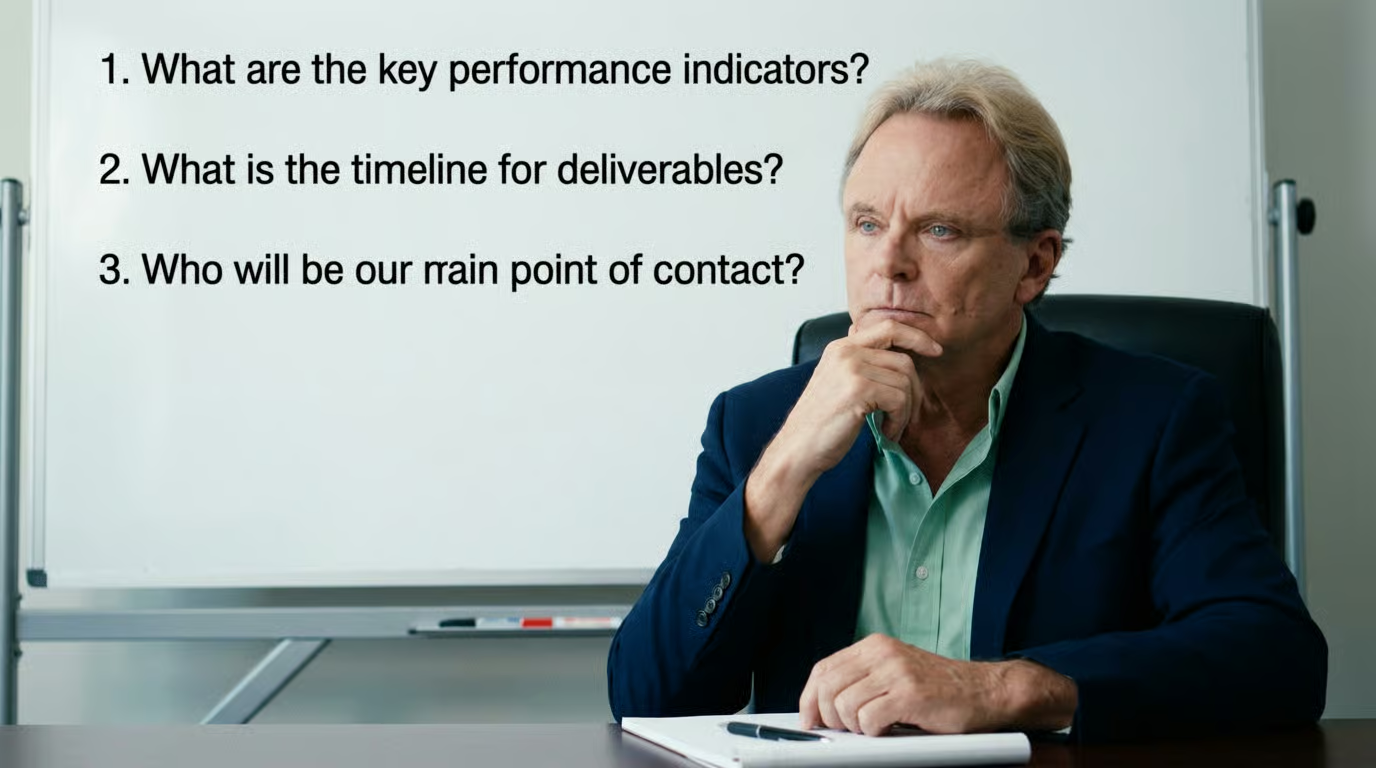
Every question I ask during discovery serves a specific diagnostic purpose.
- “What happens after someone watches this video?” This reveals whether you’re thinking about distribution and conversion or just thinking about production.
- “Who else needs to approve this before we move forward?” This uncovers decision-making bottlenecks that will slow down timelines and increase revision cycles.
- “What have you tried before that didn’t work?” This shows me what mistakes to avoid and what expectations I need to reset.
- “How will you measure success?” This separates strategic thinkers from people who just want a video because everyone else has one.
- “What’s your realistic timeline and budget range?” This eliminates the dance. If we’re not aligned on resources, we’re not aligned on outcomes.
- “What formats and platforms will this live on?” This determines technical specs, aspect ratios, file deliverables, and whether we’re shooting for one output or multiple.
- “Do you have existing brand guidelines or creative assets?” This tells me whether we’re starting from scratch or building on established equity.
The IAB 2024 Digital Video Ad Spend Report confirms that brands using measurable post-production analysis achieve up to 35 percent better ROI than those that treat video as a one-off asset. These questions set up that measurement framework from the beginning.
Why This Process Protects You
When someone rushes through discovery and hands you a proposal in 48 hours, they’re not being efficient. They’re guessing.
They’re using a template. They’re pricing based on what they think you can afford. They’re building in padding because they don’t actually know what you need yet.
The proposal process I use takes longer because it eliminates surprises. When you see the final proposal, there are no hidden costs, no ambiguous deliverables, and no vague timelines. You know exactly what you’re getting, when you’re getting it, and what success looks like.
That clarity protects both of us.
You’re not wondering if you got ripped off. I’m not dealing with scope creep and endless revision requests. We both know what we agreed to, and we both hold each other accountable to it.
This is how you build partnerships instead of transactional vendor relationships. And in my experience, partnerships deliver better work, better ROI, and better long-term outcomes than any one-off project ever will.
The proposal process isn’t a formality. It’s the foundation of everything that comes after.
When you understand what questions should get asked and why each one matters, you stop evaluating video producers based on price and start evaluating them based on process. That shift changes everything.
“`