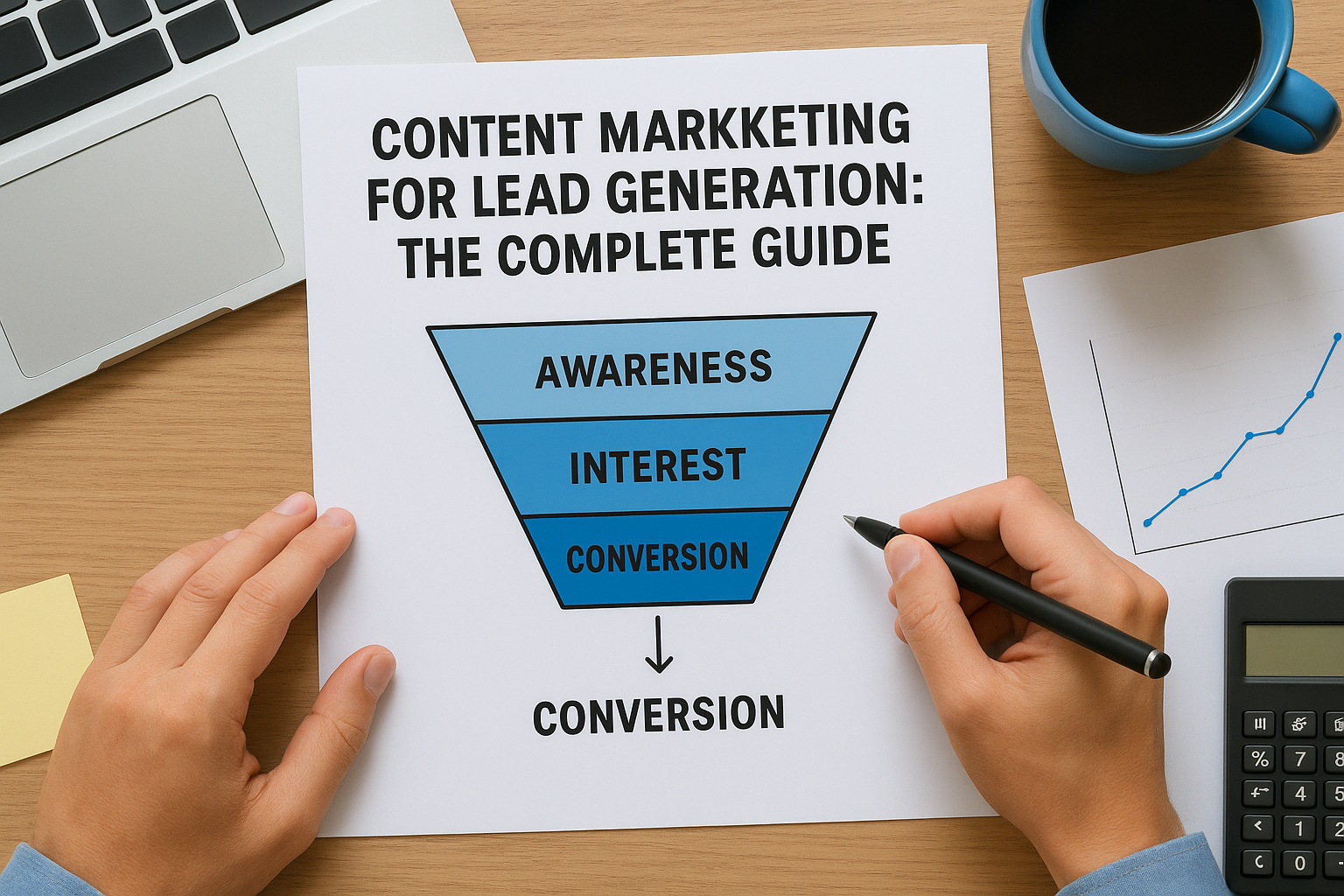
I’ve watched hundreds of companies generate thousands of leads and convert almost none of them. The pattern repeats so consistently that I stopped calling it a marketing problem years ago.
It’s a systems problem.
The lead generation industry will hit $295 billion by 2027, which tells you two things: businesses recognize lead generation as mission-critical, and most of them are failing at it badly enough to keep throwing money at the problem. When an industry grows that fast, it’s usually because the standard approaches create more problems than they solve.
Here’s what I’ve observed across enough repetition to call it a pattern: 79% of leads never convert into sales. That’s not a minor coordination issue. That’s systematic value destruction happening at scale, and it’s happening at the exact moment most companies think their work is done.
The Handoff Problem Nobody Talks About
You generate a lead. Marketing celebrates. The lead gets passed to sales. Then it dies in a CRM somewhere between “qualified” and “contacted.”
I used to think this was a sales execution problem. Better follow-up cadences, better scripts, better training. But after testing those solutions and watching them fail repeatedly, I realized the problem starts much earlier.
Only 11% of companies have a truly effective lead handoff process in place.
That statistic from DesignRush reveals something most organizations miss: the gap between marketing generation and sales conversion isn’t a training gap or a technology gap. It’s a continuity gap.
Every time you hand a lead from one system to another, from one team to another, from one set of priorities to another, you lose context. You lose momentum. You lose the psychological thread that connected that person to your message in the first place.
The lead doesn’t know they’re being “handed off.” They just know the experience changed, the tone shifted, and suddenly the company that seemed to understand them is asking them to repeat information they already provided.
Why Fragmented Systems Leak Value
Most companies build their lead generation systems by aggregating specialists. You hire a content person, a paid ads person, a CRM administrator, a sales team, maybe an agency for the creative work.
Each specialist optimizes for their domain. Content optimizes for engagement. Paid ads optimize for cost per lead. Sales optimizes for close rate.
Nobody optimizes for continuity.
I’ve seen this play out in companies spending six figures monthly on lead generation. They’ll generate 10,000 leads, qualify 1,000 of them, and convert 50. Everyone looks at the 50 conversions and calls it success because the revenue math works.
But what happened to the other 9,950 people who raised their hand and said they were interested?
They encountered friction at a handoff point. The message that attracted them didn’t match the conversation that followed. The speed of response didn’t match their urgency. The person who contacted them didn’t have context about what made them interested in the first place.
Multi-channel campaigns achieve 31% lower cost per lead than single-channel approaches, according to Sopro research. That’s significant. But here’s what that statistic doesn’t tell you: most organizations can’t execute true multi-channel integration because the coordination costs exceed the value each individual specialist brings.
You end up with multiple channels that don’t talk to each other, multiple messages that don’t reinforce each other, and multiple handoffs where leads fall through the cracks.
Best Practices That Actually Preserve Value
The companies I’ve worked with that consistently convert leads at rates 3-5x higher than their competitors don’t do anything revolutionary. They just eliminate the gaps where value leaks out.
Build Continuity Into Your System Design
Your lead generation system should answer one question: How do we preserve context and momentum from first contact through closed deal?
That means:
- The person writing your ads should understand your sales process deeply enough to set accurate expectations
- Your CRM should capture not just contact information but the specific message that attracted each lead
- Your sales team should have immediate access to every interaction that lead had with your content before they pick up the phone
- Your follow-up sequences should continue the conversation your marketing started, not restart it from zero
This sounds obvious when you read it. But I’ve reviewed hundreds of lead generation systems, and I can count on one hand the number that actually operate this way.
Collapse the Time Between Signal and Response
Buyers complete nearly 70% of their journey anonymously. By the time they fill out your form, they’ve already made most of their decision.
The speed and quality of your response in that moment determines whether you confirm or contradict the impression they’ve built.
I’ve tested response times across enough campaigns to know this: the difference between a 5-minute response and a 24-hour response is the difference between a 20% conversion rate and a 2% conversion rate.
But speed without context is just fast failure. Your rapid response needs to demonstrate that you understand why they reached out, what they’ve already learned about you, and what they’re trying to accomplish.
Integrate Production and Distribution
Most companies separate content creation from lead generation from sales enablement. Three different teams, three different objectives, three different definitions of success.
The companies that generate the highest quality leads treat all three as parts of the same system. The content you create should generate leads. The leads you generate should be pre-qualified by the content they consumed. The sales conversations you have should reference and build on that content.
When you integrate production and distribution, you eliminate the coordination loss that happens when specialists work in silos. Your content team understands what sales needs to close deals. Your sales team provides feedback that shapes what content gets created. Your lead generation strategy connects both ends of the system.
Measure Continuity, Not Just Conversion
Standard lead generation metrics tell you how many leads you generated and how many converted. They don’t tell you where the leakage happened.
Start measuring:
- Context retention rate — What percentage of leads receive follow-up that references their specific entry point?
- Handoff velocity — How much time elapses between lead capture and first meaningful contact?
- Message consistency score — Do your ads, landing pages, and sales conversations tell the same story?
- Stage-to-stage conversion rates — Where exactly are leads dropping out of your funnel?
When you start tracking continuity metrics, you’ll find the gaps in your system that standard conversion tracking misses.
The Performance Psychology Factor
Here’s something I’ve observed that most lead generation content ignores: your internal team’s confidence in the system directly affects conversion rates.
When your sales team trusts that marketing is generating qualified leads, they follow up faster and with more conviction. When your marketing team trusts that sales will handle leads properly, they focus on quality over volume. When both teams operate from the same playbook, the handoff becomes seamless.
But when trust breaks down—when sales complains that marketing leads are garbage, when marketing complains that sales isn’t following up—the system degrades from both ends.
I’ve seen companies fix their lead generation problems not by changing their tactics, but by rebuilding trust between teams through transparent systems that give both sides visibility into what’s actually happening.
What Integration Actually Looks Like
The best lead generation systems I’ve built or observed share a common architecture:
Single source of truth. Every team works from the same data, sees the same metrics, and defines success the same way. No competing dashboards, no conflicting reports, no arguments about whose numbers are right.
Unified messaging framework. The story you tell in ads matches the story on your landing page matches the story in your sales conversations. You’re not reinventing your positioning at every touchpoint.
Continuous feedback loops. Sales insights shape marketing strategy. Marketing performance data informs sales prioritization. The system learns and adapts based on what’s actually working, not what you think should work.
Accountability for outcomes, not activities. You measure teams on conversion rates and revenue generated, not on leads captured or calls made. When everyone owns the same outcome, coordination friction disappears.
Why This Matters More Now
B2B customers now engage across an average of 10 channels, up from just 5 in 2016. That explosion in touchpoint complexity rewards organizations that build unified systems rather than aggregating disconnected specialists.
You can’t manually coordinate 10 channels and maintain message consistency. You can’t hand leads through multiple systems and preserve context. You can’t fragment your approach and expect integrated results.
The companies winning at lead generation in 2025 aren’t the ones with the biggest budgets or the most sophisticated technology. They’re the ones that eliminated the structural gaps where value leaks out.
They built systems that preserve continuity from first impression through closed deal. They collapsed the separation between strategic conception and execution. They stopped optimizing individual pieces and started optimizing the whole system.
Where Most Strategies Go Wrong
I’ve reviewed enough failed lead generation strategies to identify the pattern:
Companies start with tactics. They implement best practices they read about. They copy what competitors are doing. They hire specialists to execute each piece.
But they never build the continuity layer that connects everything together.
Your paid ads might be brilliant. Your content might be compelling. Your sales team might be talented. But if those three elements don’t operate as parts of an integrated system, you’ll generate leads that never convert and wonder why your investment isn’t paying off.
The fix isn’t better tactics. It’s better architecture.
You need to build systems that eliminate handoff points, preserve context, maintain momentum, and give every team visibility into the full journey from first contact to closed deal.
That’s not a marketing problem or a sales problem. It’s a leadership problem. And it requires making decisions about how your organization operates, not just what tools you use or what tactics you deploy.
The Path Forward
If you’re generating leads but struggling to convert them, start by mapping every handoff point in your system. Every place where information transfers from one person to another, one team to another, one tool to another.
Those handoff points are where your value is leaking.
Then ask yourself: How do we eliminate these handoffs, or at minimum, how do we preserve full context through each transition?
You’ll find that most of your lead generation problems aren’t tactical problems. They’re continuity problems. And continuity problems require systems thinking, not better execution of fragmented tactics.
The companies that figure this out don’t just improve their conversion rates. They fundamentally change their competitive position because they’ve built something their competitors can’t easily replicate: an integrated system that preserves value from first contact through revenue realization.
That’s the difference between lead generation as a cost center and lead generation as a competitive advantage.