Measure twice, cut once. Now what?
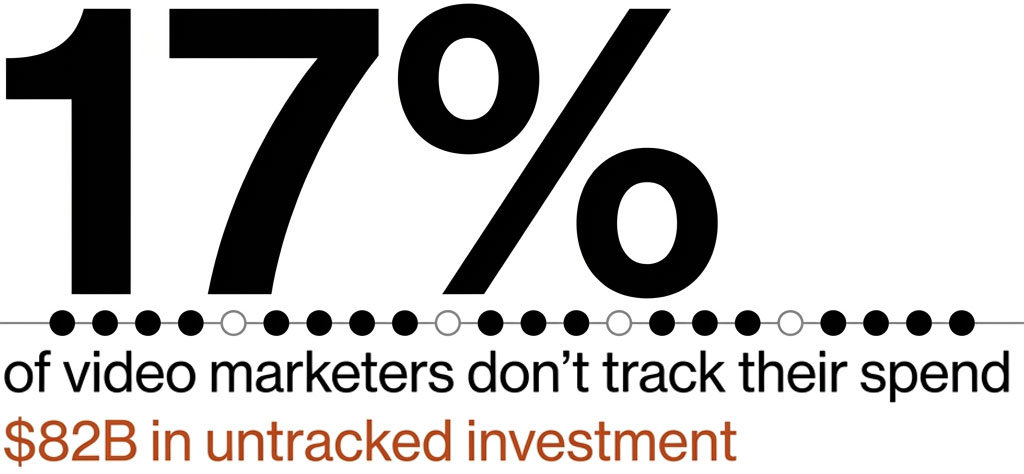
17% of video marketers aren’t tracking their spend at all.
Think about that for a second. Nearly one in five professionals creating video content—the format that now represents 82% of all internet traffic—have no idea whether it’s working. They’re flying blind in the most important medium of our generation.
This isn’t just a measurement problem. It’s a leadership problem.
The Skills Inventory Is Growing, Whether You’re Ready or Not
The contemporary business environment demands continuous expansion of leadership skills. I used to think this was optional—something ambitious leaders did to stay ahead. After working with seventy-plus agencies and watching patterns repeat across construction, manufacturing, mental health, and law enforcement sectors, I realized something different.
The expansion isn’t optional anymore.
Digital tools keep arriving. Social platforms keep fragmenting. Customer expectations keep rising. And the gap between leaders who adapt and leaders who resist is becoming a chasm that swallows companies whole.
Here’s what I’ve observed: the proliferation of digital tools isn’t slowing down. It’s accelerating. And the strategic interpretation of their utility has become the defining characteristic of successful leadership in 2026.
Social media has transcended its initial role as a general networking platform. It’s now a highly specialized channel for targeted sales outreach across specific verticals. This represents a monumental shift from the limited media landscape of the 1960s—when ABC, NBC, and CBS were the only game in town—to today’s ecosystem of thousands of diverse social networks.
The democratization of media moved power from a few traditional gatekeepers to countless niche communities and direct brand-to-consumer channels.
But here’s the thing most people miss: democratization doesn’t mean simplification. It means complexity. It means you need to know more, understand more, execute better, and measure smarter than ever before.
The Client Spectrum You Need to Understand
I’ve identified three distinct client profiles when it comes to new digital tools. Understanding which category your clients fall into determines everything about how you serve them.
The Interested: These clients see the potential but lack the confidence to execute. They’re reading articles, watching competitors, asking questions. They want to move but need someone to show them the path.
The Enthusiastic: These clients are already experimenting. They’ve tried TikTok, dabbled in LinkedIn video, maybe even hired someone to run their Instagram. They’re dangerous in a good way—they’ll try anything, but they need structure to turn enthusiasm into results.
The Disinterested: These clients have decided digital isn’t for them. They’ve been burned before, or they’re convinced their industry is different, or they’re just tired. They’re not wrong to be skeptical—they’ve probably worked with marketers who overpromised and underdelivered.
The critical insight for marketing professionals is this: regardless of where clients fall on this spectrum, the prevailing trend is that new tools are overwhelmingly geared towards content creation in diverse formats. Video podcasts. Blogs. Explainer videos. Long-form articles. User-generated content.
The undeniable imperative for marketers is to pivot towards expertise in video content for social media and e-marketing.
This isn’t a suggestion. It’s a survival requirement.
The Great Fragmentation Changed Everything
 Researchers now call what’s happening “The Great Fragmentation”—a structural shift from a platform-centric internet to a culture-centric one. If 2019’s digital ecosystem resembled a solar system with a few massive platforms, 2026 resembles a Big Bang with audiences fragmenting across ecosystems that each encode different identity logics, social norms, and value systems.
I’ve watched this play out with my own clients. A construction company that dominated Facebook suddenly found their audience migrating to LinkedIn and Instagram simultaneously. A mental health practice discovered their referral sources were active on completely different platforms than their potential clients. A manufacturing firm realized their B2B buyers were consuming content on YouTube at night and LinkedIn during work hours.
The fragmentation creates a paradox: social media’s share of total ad spend dropped from 18% to 17% in 2025—not because performance declined, but because platform fragmentation, creative demands, and operational complexity created execution challenges even as 95% of marketers view social as critical infrastructure.
You read that right. Social media is more important than ever, but harder to execute than ever. The gap between strategic importance and operational mastery is widening.
And here’s the part that should keep you up at night: 87% of consumers switch between digital activities at least once per hour, while 42% describe their purchase journey as random. The traditional marketing funnel has collapsed. Consumers can see an ad on connected TV, price-check on their phone, and complete purchase on social media—all before the next commercial break.
Only 43% of marketers say they’re confident measuring performance across this fragmented reality.
The Video Format Question Has Been Answered
While everyone’s debating which platform to prioritize, the data has already told us which format wins.
Short-form video delivers 49% ROI—the highest of any content format. Long-form video trails at 29%. Live video sits at just 25%.
This isn’t opinion. It’s performance data from marketers tracking actual returns.
But here’s what I’ve learned from producing 850 websites and bringing 7,000 items to market over six decades: knowing the answer and executing the answer are completely different skills. Most businesses know they need video. They just don’t know how to create it at the quality level customers now expect.
Because customer expectations have fundamentally shifted. 80% of consumers say their experience with a brand is just as important as its products and services. Yet 32% will abandon a brand after a single bad experience.
Marketing creates expectations that customer service must fulfill. When alignment breaks, acquisition gains turn into retention losses, undermining the ROI of every dollar spent on customer acquisition.
This means your video content isn’t just competing with other marketing messages. It’s setting the expectation bar for every interaction that follows. If your video looks professional, customers expect professional service. If your video demonstrates expertise, customers expect expert delivery.
The tolerance for risk has evaporated. The demand for measurable outcomes has skyrocketed.
The Leadership Imperative Nobody Wants to Hear
67% of market leaders beat their competitors because of advanced digital adoption strategies—not better products, but better integration of tools into operational reality.
Yet 84% of businesses fail in digital transformation.
I’ve watched this failure pattern repeat across industries. The problem isn’t the technology. The problem is that technology adoption requires leadership alignment, clear communication, and structured support at every step. You can’t just implement tools and hope people figure them out.
Effective leaders approach technology adoption with clear understanding of the employee experience they want to create. Leadership intent is the decisive factor. Digital tools don’t build trust or demonstrate values on their own. Those outcomes depend on the person making decisions about how, when, and why the organization uses the tool.
This is where most marketing conversations break down. We talk about platforms, algorithms, content calendars, and posting schedules. But we skip the most important question: Does your leadership team understand what you’re trying to build, and are they aligned on the customer experience you’re promising?
Because here’s what I’ve observed after managing over a billion dollars in portfolio: the companies that win aren’t the ones with the best technology. They’re the ones where leadership understands the technology well enough to make strategic decisions about deployment, measurement, and iteration.
The AI Question You’re Probably Asking Wrong
Everyone wants to know about AI. Should we use it? How much? Will it replace our team?
The data tells a nuanced story. 75% of marketing videos in 2026 are expected to be AI-generated or AI-assisted, with 63% of video marketers already using AI tools for creation or editing—up from 51% just one year ago.
But here’s the part most people miss: 72% still require human review before publishing, and AI-generated video achieves only 61% engagement for brand storytelling content requiring emotional nuance.
I’ve tested this extensively. AI is exceptional at structure, speed, and scale. It’s weak at authenticity, emotional resonance, and brand voice consistency. The companies that win with AI are the ones that understand this distinction and use AI to amplify human creativity rather than replace it.
The question isn’t whether to use AI. The question is: Do you understand your brand voice well enough to know when AI is serving it and when it’s diluting it?
Most companies can’t answer that question because they’ve never defined their brand voice with enough precision to measure against it.
What This Means for You Right Now
If you’re a business leader reading this, you’re facing a decision point. The skills inventory of business leaders is growing. Part of that growth comes from tools. Part comes from the interpretation of how those tools can be used.
You can resist this expansion and hope your market stays stable long enough for you to retire. Some markets will. Most won’t.
Or you can recognize that the expectation a marketing professional should have is that the client profile is going to be either interested, very enthusiastic, or totally disinterested in new tools. Those new tools are unswervingly delivered toward content—video podcasts, blogs, explainers, long format, user-generated content.
The bottom line is video for use in social media and e-marketing. That is where marketers must pivot, because customers are going to expect you to be an expert at it.
And that means the customer is going to have a lower tolerance for risk and a higher demand for outcome.
This isn’t about chasing trends. This is about recognizing that 91% of businesses now use video as a marketing tool in 2026, with 82% of marketers reporting positive ROI. Even though that ROI number dropped from 93% in 2025—signaling increasing sophistication in measurement expectations—92% of marketers plan to maintain or increase video spending.
The market has spoken. The question is whether you’re listening.
The Infrastructure Nobody’s Building Yet
I’m building something that doesn’t exist yet: a walk-in video production studio model with broadcast-level infrastructure. Five cameras. Twenty audio channels. 500 meg bandwidth. Network-quality live editing.
The model is designed to democratize professional video the way desktop publishing disrupted print in the 1980s. Businesses walk in, grab a mic, go live, and walk out with broadcast-quality content.
This isn’t a dream. It’s a trajectory based on pattern recognition that most marketers will never accumulate. I’ve been on camera since age four. I’ve produced 850 websites. I’ve managed over a billion dollars in portfolio. I’ve watched the industry shift from three networks to thousands of social platforms.
And I can tell you with certainty: the gap between what customers expect and what most businesses can deliver is growing wider every day.
The companies that close that gap will dominate their markets. The companies that ignore it will become case studies in disruption.
The choice is yours. But the timeline isn’t.
The market is moving whether you’re ready or not. The only question is whether you’re going to lead the transition or be dragged through it.
I highly recommend you start by answering one question honestly: Can you measure the ROI of your current video marketing efforts? If the answer is no, you’re part of that 17% flying blind. And in a market where 84% of consumers want to see more video content from brands, flying blind is no longer a viable strategy.
It’s time to get serious about measurement, serious about quality, and serious about the leadership alignment required to execute at the level your customers now expect.
Because the tolerance for risk has evaporated. And the demand for measurable outcomes has never been higher.