
Over 85 percent of American companies say that design is a critical factor in their brand’s success. Businesses across the United States know that first impressions are shaped by more than just what a product does. In a crowded market, visual identity and design set powerful brands apart from competitors and help customers form lasting connections. Discover how thoughtful design choices can drive emotional engagement, build loyalty, and turn a simple logo into a memorable symbol.
Table of Contents
- Defining The Role Of Design In Branding
- Visual Identity Essentials For Strong Brands
- Emotional Connections Through Effective Design
- Digital Presence And Brand Consistency Online
- Common Design Pitfalls To Avoid In Branding
Key Takeaways
| Point | Details |
|---|---|
| Role of Design | Design is a strategic tool that communicates a brand’s identity and values, influencing perception and value creation. |
| Visual Identity Elements | Strong visual identities include logo design, color palettes, typography, and imagery that reflect brand essence and evoke emotional responses. |
| Emotional Connections | Brands can foster engagement and loyalty through emotional design, leveraging color psychology and storytelling to create meaningful connections. |
| Digital Consistency | Maintaining a unified brand identity across digital platforms is crucial for recognition and effective communication with audiences. |
Defining the Role of Design in Branding
Design serves as the visual heartbeat of brand communication, transforming abstract business concepts into tangible, memorable experiences. Far more than mere aesthetic decoration, design represents a strategic tool that communicates corporate identity, values, and positioning.
At its core, design plays a critical role in brand perception and value creation. Research exploring visual design’s impact on brand value reveals that successful design transcends surface-level aesthetics, functioning as a sophisticated language that speaks directly to consumer emotions and expectations. By systematically integrating visual elements, businesses can construct powerful brand narratives that resonate deeply with target audiences.
The strategic significance of design encompasses several key dimensions:
- Visual Identity: Creating unique visual signatures that distinguish a brand from competitors
- Emotional Connection: Crafting design elements that trigger specific emotional responses
- Communication Channel: Translating complex brand messages into intuitive visual experiences
- Competitive Differentiation: Establishing memorable brand recognition through distinctive design approaches
Professional design goes beyond superficial appearances. It represents a deliberate, calculated approach to brand communication that transforms visual elements into powerful business assets. By understanding design’s multifaceted role, organizations can leverage visual communication as a strategic tool for driving engagement, building trust, and ultimately accelerating business performance.
Visual Identity Essentials for Strong Brands
Visual identity represents the cornerstone of brand communication, serving as the visual DNA that distinguishes businesses in a crowded marketplace. More than just logos and color palettes, it encompasses a comprehensive system of design elements that communicate a brand’s core essence and values to its target audience.

Research on brand logos reveals that effective visual identities go far beyond simple recognition. They function as powerful tools for facilitating customer self-expression, representing functional benefits, and creating aesthetic appeal. The psychological impact of visual design is profound, with strategic logo development capable of significantly influencing customer brand commitment and overall business performance.
Key components of a robust visual identity include:
- Logo Design: A distinctive symbol that encapsulates brand personality
- Color Palette: Carefully selected colors that evoke specific emotional responses
- Typography: Consistent font choices that reflect brand character
- Visual Language: A cohesive set of design elements and visual principles
- Brand Imagery: Consistent photographic and graphic style that reinforces brand messaging
Interestingly, studies on logo complexity demonstrate that the simplicity of a visual design can significantly impact how consumers perceive a brand’s competence and warmth. Simple, clean designs often communicate professionalism and clarity, while more complex designs might convey creativity or depth. The key is finding the right balance that authentically represents the brand’s unique identity and resonates with the target audience’s expectations and aspirations.
Emotional Connections Through Effective Design
Emotional design transforms visual communication from a passive experience into an active dialogue between brands and consumers. At its core, design serves as a powerful psychological instrument that can trigger deep emotional responses, creating meaningful connections that transcend traditional marketing approaches.
Neuroscientific research on logo design reveals the profound impact of visual elements on consumer perception and engagement. By strategically crafting design elements, brands can elicit specific emotional reactions that resonate with their target audience, ultimately influencing brand loyalty and purchase behavior. These emotional triggers are not random but carefully constructed psychological pathways that connect visual aesthetics with human sentiment.
Key emotional design strategies include:
- Color Psychology: Utilizing specific color palettes to evoke targeted emotional responses
- Visual Storytelling: Creating narrative experiences through design elements
- Sensory Engagement: Designing experiences that stimulate multiple sensory perceptions
- Authenticity: Developing visual identities that genuinely reflect brand values
- Contextual Relevance: Adapting design to specific audience expectations and cultural nuances
Generational research on logo complexity demonstrates that emotional connections vary across different demographic groups. What resonates with younger audiences might not appeal to older consumers, highlighting the importance of nuanced, targeted design approaches. Successful brands understand that emotional design is not a one-size-fits-all strategy, but a sophisticated, dynamic process of understanding and responding to evolving consumer psychology.
Digital Presence and Brand Consistency Online
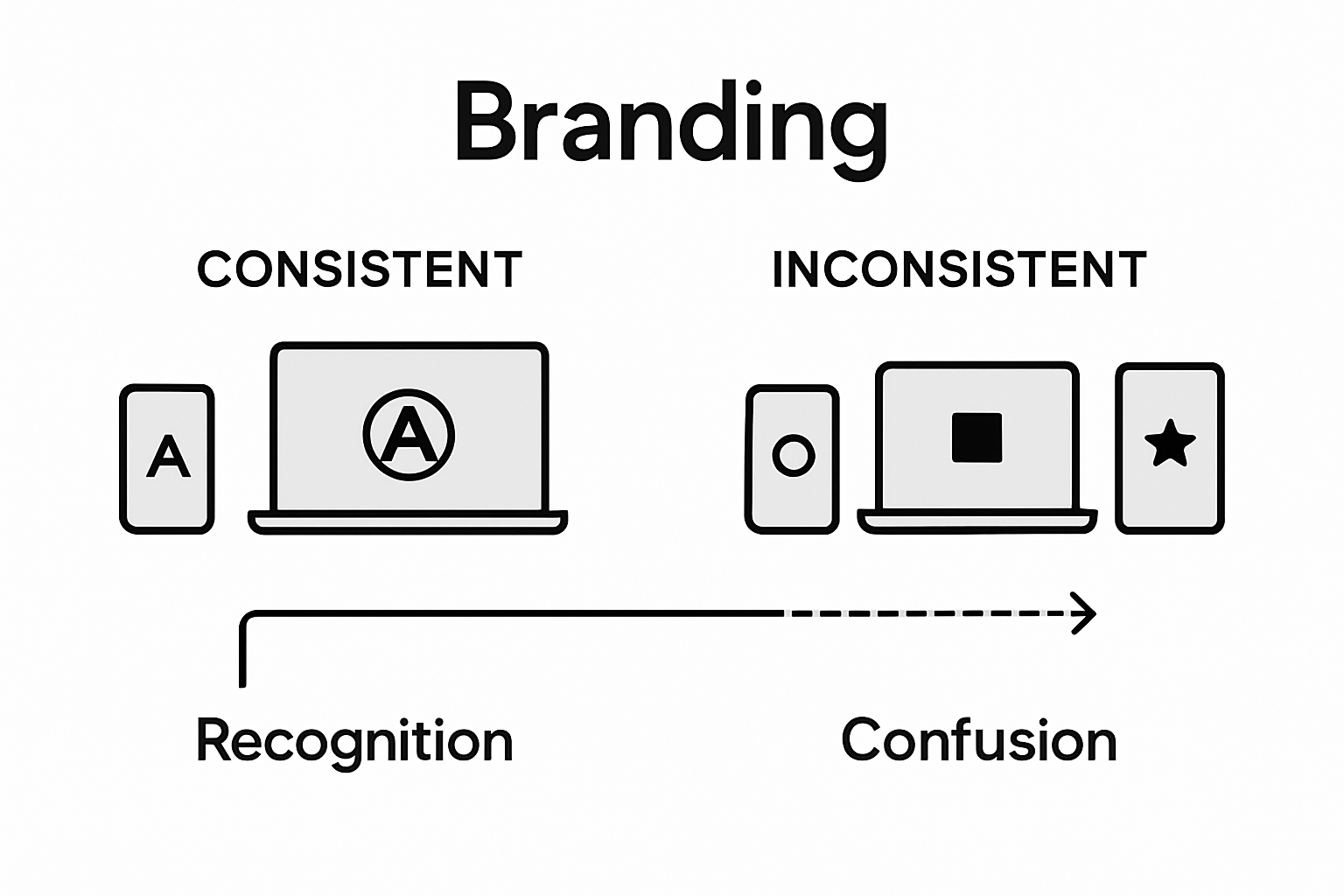
Digital brand consistency is the strategic art of maintaining a unified, recognizable brand identity across multiple online platforms and touchpoints. In today’s interconnected digital ecosystem, brands must craft a seamless visual and messaging experience that resonates consistently, whether a customer encounters the brand on social media, websites, mobile apps, or digital advertising.
Advanced research on brand visual representations reveals how deep learning technologies can analyze and quantify brand visual characteristics across digital platforms. These sophisticated analytical techniques help brands understand their visual identity spectrum, ranging from explicit logo-driven designs to more subtle, implicit brand expressions. This nuanced approach enables businesses to create more strategic and cohesive digital brand experiences.
Key strategies for maintaining digital brand consistency include:
- Visual Uniformity: Maintaining consistent color schemes, typography, and graphic styles
- Messaging Alignment: Ensuring consistent tone of voice across all digital channels
- Logo Application: Developing clear guidelines for logo usage and placement
- Content Strategy: Creating content that reflects core brand values
- Cross-Platform Optimization: Adapting design elements for different digital environments
Innovative logo detection frameworks demonstrate how advanced technologies can now track and analyze brand visibility across digital platforms. These cutting-edge approaches help brands understand how their visual identity performs across different digital contexts, providing actionable insights for refining their online brand presence and engagement strategies.
Common Design Pitfalls to Avoid in Branding
Brand design is a delicate balance between creativity and strategic communication, where seemingly minor missteps can significantly undermine a company’s visual identity and market perception. Navigating the complex landscape of design requires a nuanced understanding of both aesthetic principles and strategic brand positioning.
Research exploring the deeper dimensions of design development reveals that effective branding transcends surface-level aesthetics, demanding a profound connection between visual communication and broader organizational goals. Designers must recognize that their work is not just about creating attractive visuals, but about empowering cultural consumption and reflecting the core purpose of an organization.
Critical design pitfalls to be aware of include:
- Inconsistent Visual Language: Failing to maintain a cohesive design approach across platforms
- Overcomplicating Design: Creating visual identities that are too complex or difficult to understand
- Neglecting Target Audience: Designing without a clear understanding of demographic preferences
- Trend Chasing: Sacrificing timeless brand identity for temporary design trends
- Lack of Authenticity: Developing designs that do not genuinely reflect brand values
Case studies in product design evolution demonstrate the importance of strategic design transformation. Successful brands understand that design is not about radical reinvention, but about thoughtful adaptation that maintains core brand essence while remaining responsive to changing market dynamics. The most effective design strategies strike a delicate balance between preserving brand heritage and introducing subtle, meaningful innovations that keep the brand relevant and engaging.
Elevate Your Brand with Strategic Design That Drives Success
Understanding how design shapes brand perception is crucial for any business aiming to build lasting emotional connections and stand out in a crowded marketplace. This article highlights the challenges many companies face such as creating consistent visual identity, avoiding overcomplicated design, and fostering authentic emotional engagement with their audience. These are common pain points that ultimately affect brand loyalty and business growth.
At Appture Digital Media, LLC, we specialize in transforming these complex branding challenges into powerful, streamlined visual strategies. Our expert team blends beautiful design with strategic brand messaging to help Texas businesses develop clear, memorable identities that resonate deeply. Whether you need a complete brand strategy, custom website design, or integrated digital marketing solutions, we provide measurable results that enhance your competitive advantage.
Take the first step in unlocking your brand’s full potential with proven design strategies from a trusted digital marketing agency. Discover how our brand expertise can help you avoid common design pitfalls while creating emotional impact and digital consistency.
Ready to transform your brand through exceptional design and strategy?

Start your journey today by scheduling a personalized consultation at Appture Digital Media Meet Now and see how strategic design can power your business forward. Don’t let inconsistent or ineffective branding hold you back. Visit Appture Digital Media, LLC now to connect with experts committed to your success.
Frequently Asked Questions
What is the role of design in branding?
Design serves as the visual heartbeat of brand communication, translating business concepts into memorable experiences and effectively communicating corporate identity, values, and positioning.
How can effective design create emotional connections with consumers?
Effective design can trigger specific emotional responses through color psychology, visual storytelling, and authenticity, creating meaningful connections that enhance brand loyalty and influence purchasing decisions.
Why is digital brand consistency important?
Digital brand consistency ensures that a brand’s visual identity and messaging are cohesive across various online platforms, enhancing recognition and trust among consumers, which is crucial in today’s interconnected digital landscape.
What are common pitfalls to avoid in brand design?
Common pitfalls include inconsistent visual language, overcomplicating designs, neglecting target audience preferences, chasing fleeting design trends, and lacking authenticity in brand representation.
Recommended
- 14 Ways To Improve Ecommerce Product Pages For SEO – Appture Digital ~ 855 Get Bizz
- 7 Practical Examples Of Branding Strategies For Texas SMBs – Appture Digital ~ 855 Get Bizz
- Real Estate SEO: 6 Things You Can Do To Compete With Big Sites – Appture Digital ~ 855 Get Bizz
- Brand Awareness Explained: Strategies And Key Benefits – Appture Digital ~ 855 Get Bizz
- Designer Düfte verstehen: Was sind sie und warum zählen sie?
- Il Brand Designer nella Moda Italiana: Una Visione Innovativa per l’Evoluzione del Settore – Corrado Manenti
- 7 Key Packaging Trends for 2025 You Need to Know – Spaceman