
Table of Contents
- Content Marketing Funnel Explained Simply
- Types of Funnels for Business Growth
- Key Stages and Audience Journey
- Conversion Tactics That Drive Results
- Cost, ROI, and Mistakes to Avoid
Key Takeaways
| Point | Details |
|---|---|
| Understand the Marketing Funnel Stages | Businesses must tailor content for each stage: awareness, interest, consideration, and conversion to guide potential customers effectively. |
| Utilize Diverse Funnel Types for Growth | Different funnels like Lead Generation, Sales, and Content Marketing serve distinct purposes and target unique audience segments. |
| Map the Customer Journey | Create detailed customer personas to identify motivations and pain points at each journey stage for targeted marketing strategies. |
| Optimize for Conversion and ROI | Implement systematic tracking of performance metrics and refine strategies to enhance the effectiveness of marketing investments. |
Content Marketing Funnel Explained Simply
A marketing funnel represents the strategic pathway customers travel from initial awareness to final purchase. Marketing funnel strategies capture how businesses guide potential customers through multiple decision making stages, transforming casual interest into committed purchasing behavior.
The traditional marketing funnel consists of four primary stages: awareness, interest, consideration, and conversion. Each stage requires targeted content and strategic messaging designed to progressively move potential customers closer to making a purchase. At the awareness stage, businesses generate initial visibility through broad marketing techniques like social media, blog content, and digital advertising. The interest phase involves creating compelling narratives that resonate with target audience pain points and demonstrate potential solutions.
During the consideration stage, businesses provide detailed information through case studies, comparison guides, and product demonstrations that help potential customers evaluate their options. The final conversion stage focuses on removing purchase barriers by offering clear value propositions, testimonials, and low-risk entry points like free trials or consultations. Content marketing tactics play a critical role in nurturing prospects through each funnel stage, delivering precise information that addresses specific customer needs and motivations.
Pro Tip for Marketing Success: Design content specifically tailored to each marketing funnel stage, ensuring your messaging becomes progressively more targeted and solution-oriented as potential customers move closer to making a purchase decision.
Types of Funnels for Business Growth
Businesses can develop multiple marketing funnel strategies tailored to specific growth objectives. Different marketing funnel approaches allow companies to target unique customer segments and optimize conversion pathways based on their specific industry and target audience.
Four primary marketing funnel types dominate strategic business growth approaches. The first is the Lead Generation Funnel, which focuses on attracting potential customers through targeted content and initial engagement strategies. This funnel prioritizes capturing contact information and nurturing initial interest. The Sales Funnel follows a more direct approach, concentrating on moving prospects quickly from awareness to purchase through strategic messaging and compelling value propositions.
The Content Marketing Funnel emphasizes providing value-driven information at each stage of the customer journey, utilizing blog posts, videos, webinars, and educational resources to build trust and demonstrate expertise. Lastly, the Product Awareness Funnel concentrates on educating potential customers about product features, benefits, and unique selling points, typically used by businesses with complex or innovative offerings that require deeper explanation and understanding.

Here’s a summary table comparing the key types of marketing funnels and their business impact:
| Funnel Type | Main Objective | Typical Content Used | Business Impact |
|---|---|---|---|
| Lead Generation Funnel | Capture initial prospect information | E-books, newsletters | Grows qualified contact database |
| Sales Funnel | Drive swift purchase decisions | Landing pages, demo offers | Boosts conversion rates |
| Content Marketing Funnel | Educate and build audience trust | Blogs, webinars, case studies | Increases engagement and loyalty |
| Product Awareness Funnel | Explain product features in detail | Tutorials, feature overviews | Improves product understanding |
Pro Tip for Funnel Selection: Analyze your specific business model, target audience, and sales cycle to determine which marketing funnel type will most effectively convert potential customers and drive sustainable business growth.
Key Stages and Audience Journey
The customer journey represents a strategic progression through multiple psychological and behavioral stages, ultimately guiding potential buyers from initial awareness to final purchase. The purchase funnel framework provides a comprehensive model for understanding how consumers move through complex decision-making processes, revealing critical insights into motivation and engagement.
Traditionally, the audience journey follows four primary stages aligned with the AIDA model: Attention, Interest, Desire, and Action. In the Attention stage, businesses capture initial audience awareness through compelling marketing messages, eye-catching visuals, and targeted advertising. During the Interest phase, potential customers begin exploring solutions, seeking more detailed information about products or services that might address their specific needs.
The Desire stage represents a critical turning point where potential customers emotionally connect with a product’s value proposition. At this stage, businesses must demonstrate unique benefits, address potential concerns, and build trust through social proof, testimonials, and detailed product explanations. Consumer behavior stages ultimately culminate in the Action phase, where carefully nurtured leads transform into committed customers through strategic calls-to-action, simplified purchasing processes, and compelling final incentives.
Pro Tip for Journey Mapping: Create detailed customer personas that map specific motivations, pain points, and decision triggers for each stage of the audience journey, enabling more precise and empathetic marketing strategies.
Conversion Tactics That Drive Results
Successful digital marketing demands strategic conversion tactics that transform potential leads into committed customers. Content marketing integration with sales processes represents a critical approach for businesses seeking to optimize their marketing funnel and maximize return on investment.
Effective conversion strategies involve multiple interconnected elements. First, businesses must develop compelling content that directly addresses customer pain points and demonstrates clear value propositions. This includes creating targeted landing pages, crafting persuasive call-to-action statements, and designing user-friendly conversion paths that minimize friction. Implementing A/B testing allows marketers to continuously refine messaging, visual design, and interactive elements to improve conversion rates and engagement.
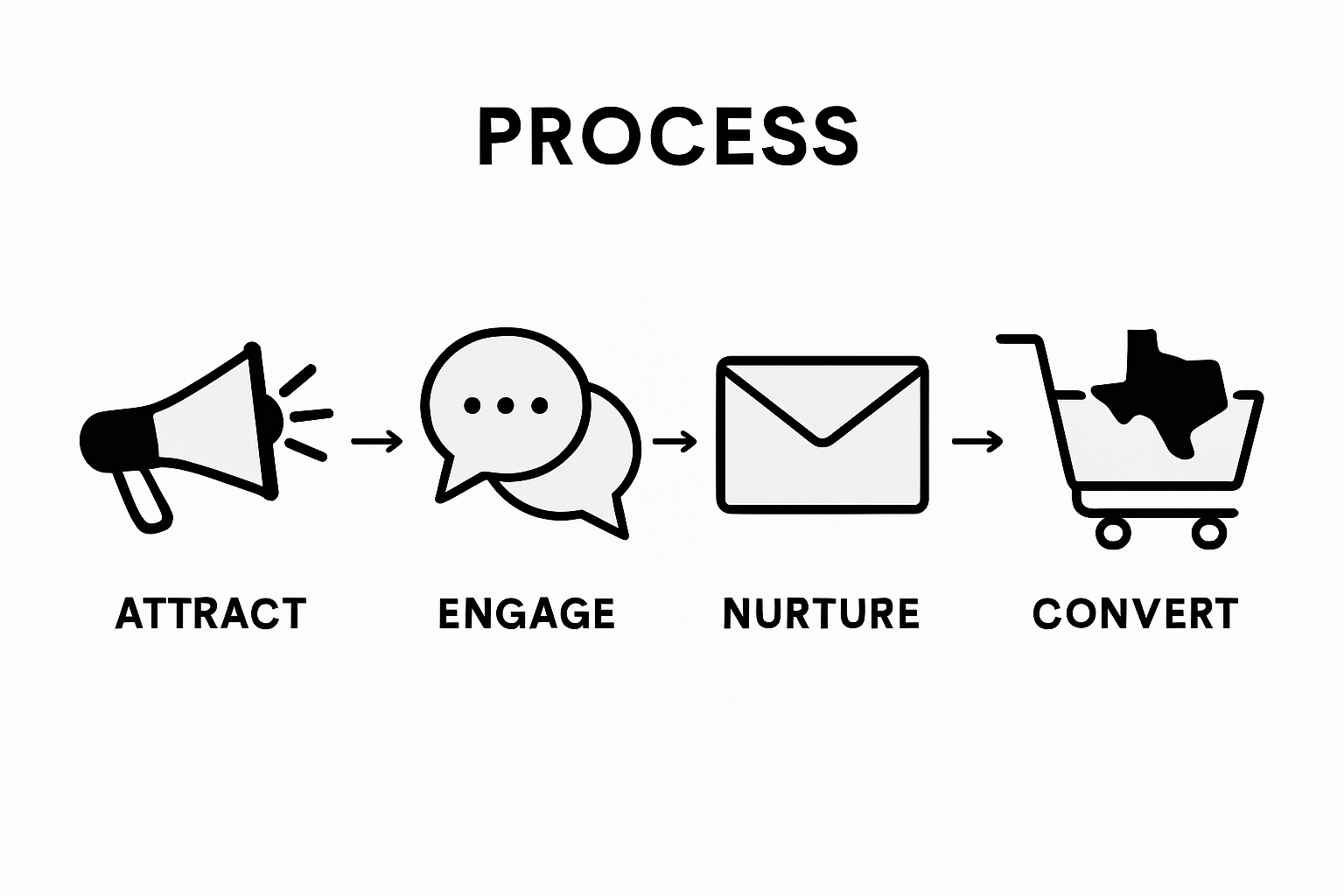
AI-driven marketing insights can significantly enhance conversion optimization by providing data-driven recommendations for content design and customer engagement. Advanced technologies enable businesses to personalize marketing experiences, predict customer behaviors, and create more nuanced targeting strategies. Key tactics include leveraging retargeting campaigns, developing segmented email marketing approaches, and utilizing dynamic content that adapts to individual user preferences and interaction histories.
Pro Tip for Conversion Optimization: Develop a systematic approach to tracking and analyzing conversion metrics, focusing on understanding the specific triggers and barriers that influence customer decision-making throughout your marketing funnel.
Cost, ROI, and Mistakes to Avoid
Marketing funnel success hinges on understanding the delicate balance between investment and measurable outcomes. Return on Investment (ROI) serves as the critical metric that determines the effectiveness of content marketing strategies, revealing whether businesses are generating meaningful value from their digital efforts.
Advanced analytics frameworks enable businesses to optimize marketing spend by providing precise insights into campaign performance. Common mistakes that erode ROI include failing to track key performance indicators, investing randomly without strategic targeting, and neglecting to continuously refine marketing approaches. Businesses should allocate approximately 5-10% of their total revenue to marketing efforts, with careful allocation across different channels and consistent measurement of conversion rates, customer acquisition costs, and lifetime value.
Hybrid marketing strategies can dramatically improve overall marketing efficiency by combining traditional outreach methods with innovative digital techniques. Key mistakes to avoid include over-investing in single-channel approaches, ignoring audience segmentation, and creating generic content that fails to address specific customer pain points. Successful marketers develop nuanced strategies that balance cost-effectiveness with targeted, high-value content designed to move potential customers through the marketing funnel with minimal friction.
The table below outlines common marketing funnel mistakes and strategies for maximizing ROI:
| Mistake to Avoid | Why It Hurts ROI | ROI Improvement Strategy |
|---|---|---|
| Not tracking key performance | Misses optimization opportunities | Implement data-driven analytics |
| Over-investing in one channel | Limits audience reach | Diversify channel allocation |
| Generic, untargeted content | Fails to address real pain points | Develop audience-specific content |
| Ignoring audience segmentation | Wastes budget on low-fit leads | Apply detailed segmentation |
Pro Tip for ROI Optimization: Implement a rigorous quarterly review process that critically evaluates marketing expenditures against specific, measurable outcomes, allowing for rapid strategic adjustments and continuous improvement of your content marketing investments.
Elevate Your Texas Business with a Tailored Content Marketing Funnel
The article highlights the critical challenge many Texas businesses face: turning casual interest into measurable sales while maximizing ROI through a strategic content marketing funnel. If you struggle with guiding prospects through each stage from Awareness to Action or worry about wasted marketing spend and generic content that fails to connect, you are not alone. Successful funnel strategies require precise audience targeting, content crafted for every stage, and continuous optimization to eliminate friction in buyer journeys.
At Appture Digital Media, LLC, we specialize in helping Texas businesses overcome these exact hurdles by delivering customized marketing funnel solutions designed to boost conversion rates and increase your return on investment. With over ten years of experience, our comprehensive services include strategic search marketing, professional video production, and expert social media management to create engaging, segmented content that drives real results. Learn how we combine deep funnel expertise with beautiful design and measurable outcomes at Meet Now with Appture.
Looking for proven ways to convert more leads and stop overpaying for underperforming campaigns Act now to transform your marketing approach with a team that understands the local market and your business goals.

Discover how a strategic content marketing funnel can revolutionize your business growth. Schedule your personalized consultation today at https://leadbuildermarketing.com/meetnow and start achieving impressive ROI with Appture Digital Media.
Frequently Asked Questions
What is a content marketing funnel?
A content marketing funnel is a strategic model that outlines the stages a potential customer goes through, from initial awareness of a product or service to making a purchase. It helps businesses create targeted content to guide customers along this journey.
How can businesses increase ROI using a content marketing funnel?
To increase ROI, businesses should develop targeted content for each stage of the funnel, ensuring that messaging addresses specific customer needs and motivations. Analyzing key performance indicators and optimizing marketing strategies based on data can also enhance ROI.
What are the main stages of a marketing funnel?
The main stages of a marketing funnel are awareness, interest, consideration, and conversion. Each stage requires tailored content and strategies to progressively guide potential customers toward making a purchase.
What mistakes should businesses avoid when implementing a marketing funnel?
Common mistakes include failing to track key performance indicators, investing too heavily in single channels, creating generic content, and neglecting audience segmentation. Avoiding these pitfalls can help maximize ROI and improve overall marketing efficiency.
Recommended
- ROI Of Video Marketing: Boosting Growth For Texas SMBs – Appture Digital ~ 855 Get Bizz
- Understanding ROI In Digital Marketing: A Comprehensive Guide – Appture Digital ~ 855 Get Bizz
- Complete Guide To Video Marketing For Businesses – Appture Digital ~ 855 Get Bizz
- Content Marketing Strategies That Convert Visitors To Leads – Appture Digital ~ 855 Get Bizz
- Understanding the Importance of Customer Communication – My WordPress