A skunk is a cat designed by committee
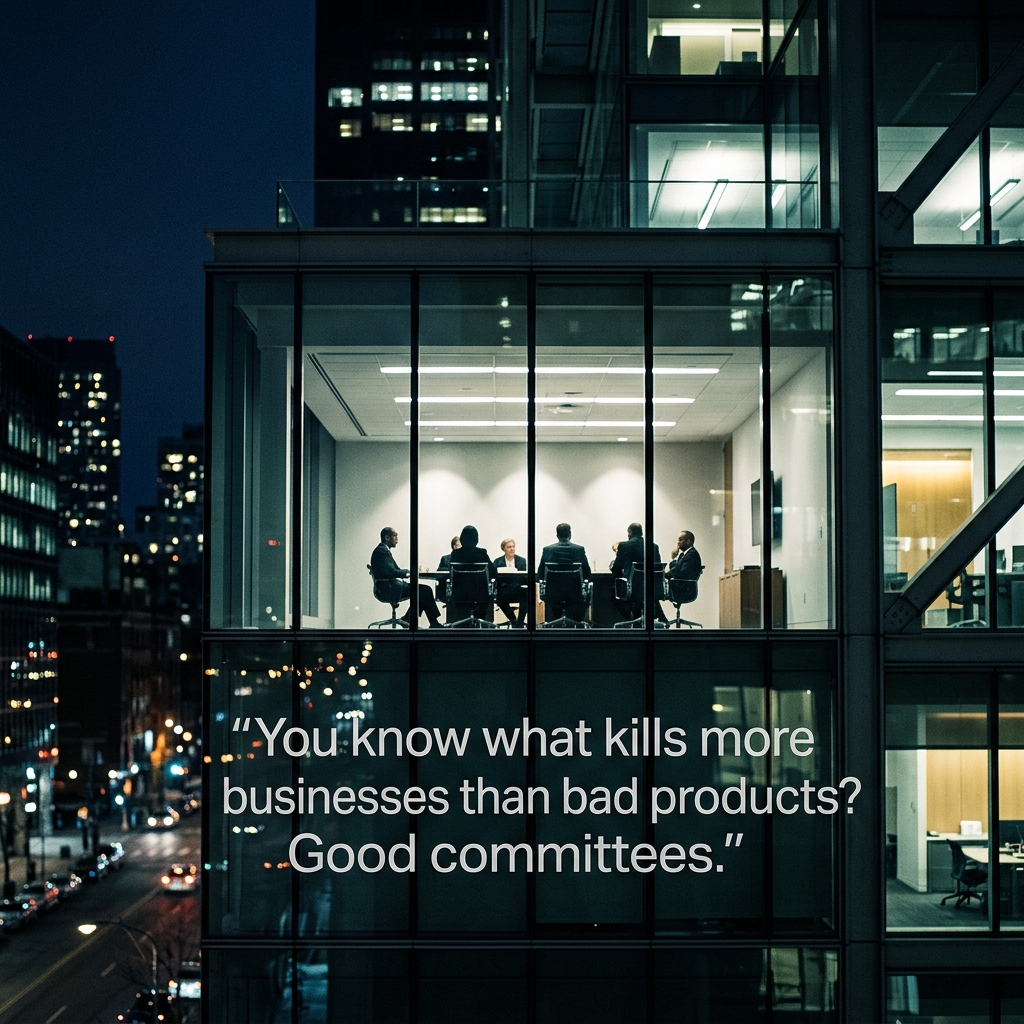
I have watched it happen for forty years. A founder has a clear vision. The product works. The market responds. Then the committee forms.
Marketing wants input. Sales wants a say. The board wants to weigh in. Finance needs to approve. Legal has concerns. HR wants alignment with company values.
Six months later, the thing that made you different is gone.
The pattern I keep seeing
A client comes to me burned. They have been through two agencies, maybe three. The first one promised the moon and delivered templates. The second one had great ideas but no follow-through. The third one was actually offshore labor branded as local talent.
I ask them what happened to their original concept.
They tell me it got “refined.”
Translation: it got committee’d to death.
The sharp edge that made people stop and look? Smoothed out because someone thought it was too aggressive. The bold claim that separated them from competitors? Watered down because legal was nervous. The personality that made the brand memorable? Removed because the VP of operations said it “wasn’t professional enough.”
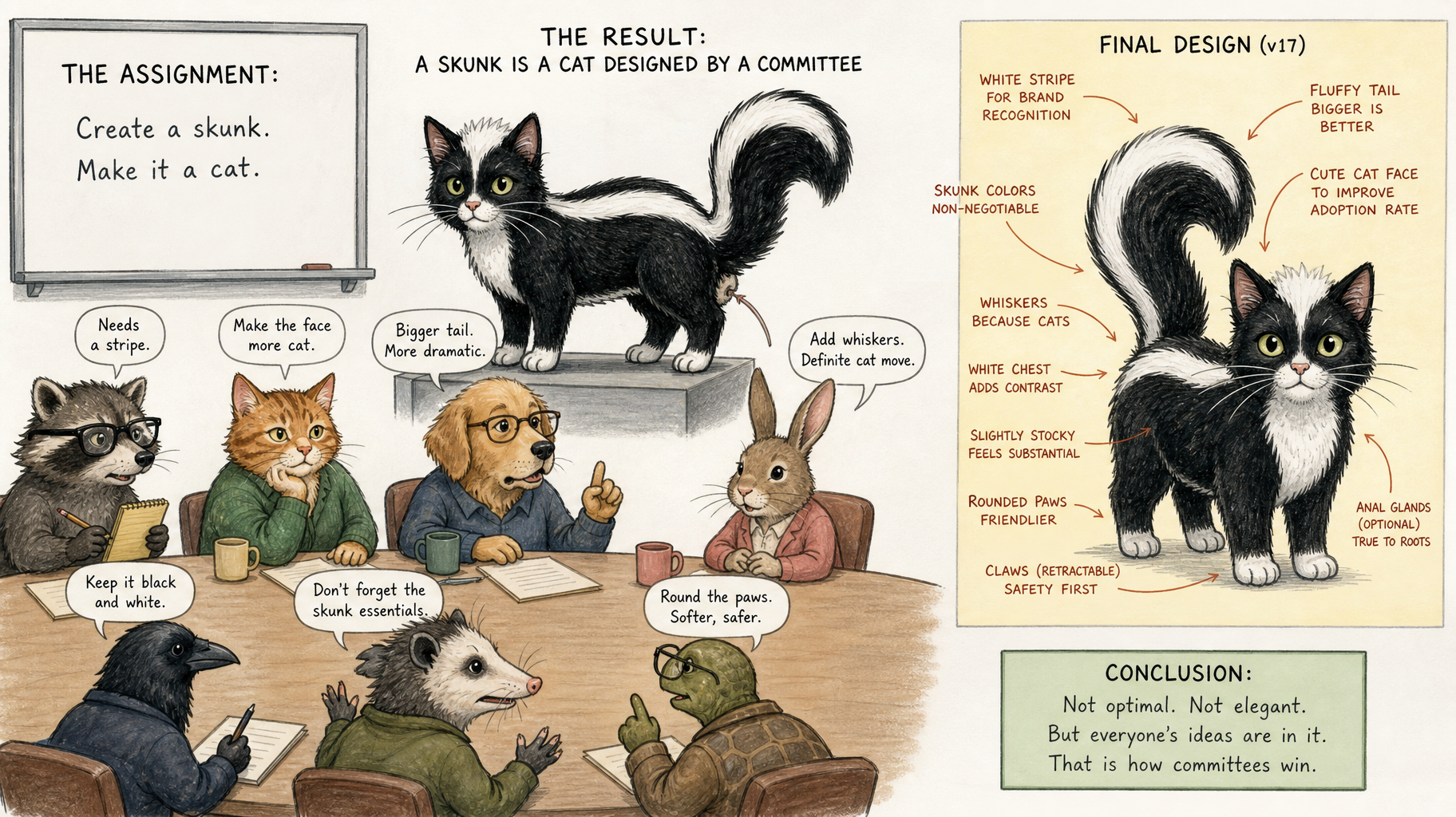
What you are left with is a skunk. It looks like a cat. It is supposed to act like a cat. But it stinks, and nobody wants to be near it.
Why this keeps happening
Committees do not create. They negotiate.
When you put ten people in a room and ask them to agree on a direction, you do not get the best idea. You get the idea that offends the fewest people. You get compromise. You get safe.
Safe does not convert. Safe does not build brands. Safe does not make people stop scrolling and pay attention.
I have brought seven thousand items to market. I have built 850 websites. I have managed over a billion dollars in portfolio. The things that worked were never designed by committee. They were designed by someone who saw the pattern, trusted their experience, and moved.
What actually works
You need “one person” who understands the full continuum.
Not a committee. Not a department. One person who can see the genetic structure of the idea before it becomes visual, who knows what will survive execution and what will collapse under market pressure.
That person listens. They research. They clarify the plan. Then they execute.
No mystery. No theater. No endless revision cycles where every stakeholder gets to leave their fingerprints on the work until it does not resemble anything useful.
When a client hires me, I do not ask them to form a committee. I ask them to trust the process. I have seen this movie. I know how it ends. If you could do it yourself, you would not need me.
The real cost
Committees do not just slow you down. They erode your competitive advantage.
While you are negotiating with internal stakeholders, your competitor is shipping. While you are refining the message to make everyone comfortable, someone else is claiming the position you should have owned.
I have watched companies lose years to this. They come back later, frustrated, asking why their marketing is not working. The answer is simple: you designed a skunk when you needed a lion.
Here’s what I recommend
If you are stuck in committee hell right now, do this:
Identify the one person who actually understands your market, your customer, and your competitive position. Give them authority. Let them build the thing without requiring consensus from people who have never closed a deal or shipped a product.
If you do not have that person, hire them. Do not hire an agency that will tell you what you want to hear. Hire someone who will tell you what you need to hear, then execute without requiring you to manage the process.
Committees are useful for governance. They are terrible for creation.
Stop designing skunks. Start shipping work that actually moves the market.
If you have been burned by agencies that overpromised and underdelivered, or if you are tired of watching good ideas get watered down by internal politics, let’s talk. I have been doing this for forty years. I know what works. And I do not need a committee to tell me.
— Daniel