So you hired an AI Consultant. That’s a step forward, because most founders think AI is a tool you could add to your skill set when you had time.
After watching companies compress decade-long learning curves into months and seeing the 40% drop in middle-management job postings since 2022, I realized something more fundamental was happening.
The entire definition of professional value is being rewritten. And most people are still optimizing for a scorecard that no longer exists.
The Baseline Has Shifted
When I look at the business landscape today, I can run a simple check on any website to see if it has an llms.txt file. This tells me whether a company is optimizing for AEO (AI Engine Optimization).
Only about 3-4% of forward-leaning companies—whether large, small, or enormous—are actually doing this work.
 That number should alarm you.
Because while 78% of organizations report using AI in at least one business function, the gap between adoption and optimization reveals where the real separation is happening. Companies are installing AI tools the way they once installed fax machines—as additions to existing workflows rather than fundamental infrastructure.
The pattern mirrors every major technological disruption I’ve seen in 35 years. When electricity came around, people who sold candles went out of business. When computers arrived, typewriter manufacturers disappeared. When the internet emerged, businesses without websites became invisible.
AI is that next disruptive change. But here’s what makes this different—the timeline is compressing faster than any previous shift.
Skill Compression Is Collapsing Professional Timelines
The learning curve compression I’m observing mirrors research showing workers with three months of tenure now perform about as well as those with a full year on the job.
When a three-month hire can match a seasoned professional, skill-based hierarchies lose their logic.
This creates a problem for traditional career development. The expertise premium that took decades to build is being democratized in months. Technical execution—the thing that used to separate junior from senior talent—is becoming commoditized.
What appreciates in value? Vision. Judgment. No. It’s the ability to ask the right questions.
I’ve managed over a billion dollars in portfolio across 850 websites. That experience taught me pattern recognition you can’t shortcut. But AI is now making the execution of those patterns accessible to people who would have needed years of apprenticeship to implement them.
The gap between knowing what needs to happen and actually doing it is shrinking to near zero.
Organizational Structures Are Dissolving
When individual humans can leverage AI to execute at what used to be team-level capacity, the entire org chart becomes obsolete.
Gartner predicts that by 2026, 20% of companies will use AI to flatten their hierarchies, cutting over half of their mid-tier roles. LinkedIn data shows a 30% drop in entry-level job listings from early 2024 to early 2025.
The traditional pyramid structure is being replaced by what experts call a “pentagon-shaped workforce” where AI augments individual capacity to team-level execution.
I see this playing out in real time with clients. The companies that rebuild their organizational charts and process flows—whether on a manufacturing floor, in a marketing team, or within an HR function—are thriving. The ones clinging to traditional hierarchies are creating bottlenecks where AI should be creating leverage.
This isn’t about efficiency for efficiency’s sake. It’s about competitive positioning. The revenue gap between companies that integrate AI into their organizational structure and those that don’t is becoming permanent.
 The Attention-Implementation Gap Is Where Value Lives
Here’s what I’ve learned from three decades of consulting: knowledge availability has never been the bottleneck. Execution is.
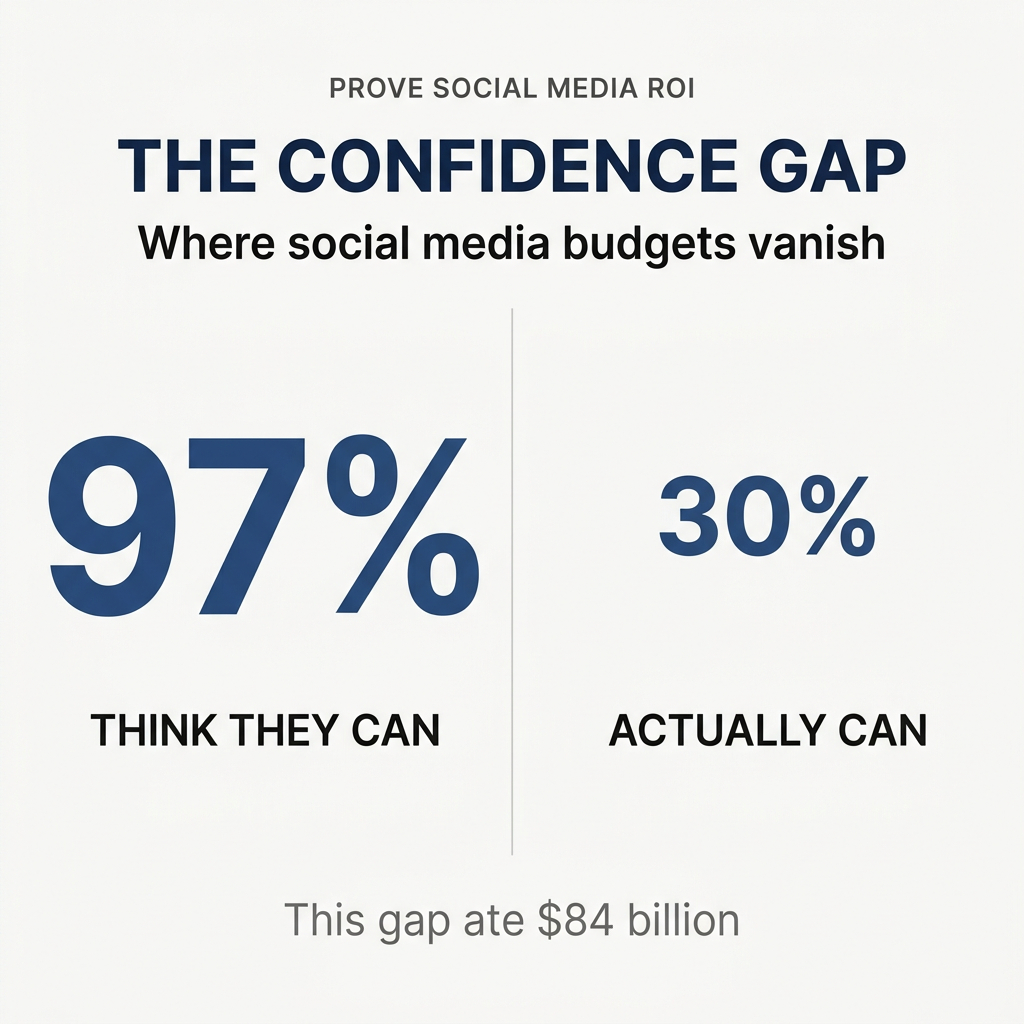
While 68% of leaders and employees say they can keep pace with AI, 93% report that workforce barriers like underdeveloped skills and inadequate training limit their progress.
The gap between confidence and capability is where consultants like me create irreplaceable value—bridging the chasm between knowing what needs to happen and actually executing it.
But here’s the thing most people miss: AI is lowering the implementation barriers faster than most realize. The people who actually build and deploy capture disproportionate value. Information consumption alone shows diminishing returns.
When I work with clients, the first diagnostic I run isn’t about their tech stack or business model. It’s about their emotional readiness. Can they embrace change? Are they willing to adapt? Can they listen to opinions other than their own?
Because if they can’t get past ego and admit they need help, no amount of AI tooling will matter. They’ll resist implementation at every turn.
Data Ownership Becomes the New Moat
Competitive advantage is shifting from skill mastery to proprietary data ownership.
Most businesses don’t fail from lack of data—they fail from inability to access and interpret it. AI transforms this limitation into advantage through data cleanup, enrichment, and insight extraction.
The companies with rich historical data and the capability to organize it create insurmountable moats. The question becomes what proprietary information you possess and how effectively AI can mine it for strategic advantage.
This is why only 1% of firms describe themselves as “mature” in AI deployment despite 78% using AI in at least one business function. The gap between adoption and maturity is where the challenge lies. Companies are adopting tools without the expertise to extract value.
The Path Forward Isn’t Optional
I’ve watched enough technological shifts to recognize the pattern. The companies that thrive aren’t the ones with the best technology—they’re the ones that integrate it into their core DNA from day one.
By year three or five, the winners own their data, they’ve optimized their workflows, they’ve built relationships with AI-augmented capacity, and they’re iterating faster than competitors can diagnose problems.
The losers? They’re still hiring consultants to explain what they should have started building two years ago.
That gap isn’t something you close with a single hire or a new tool. It’s existential.
The world is changing faster than most people expected. You can’t stop it. You better get on the bus right now or you’ll be left behind. The opportunity that comes along with early adoption is enormous because the efficiencies AI drives allow vendors and consultants who use it at a high level to outperform everyone else.